Roots and Remedies: The Urgent Mission to Safeguard Africa's Pharmacological Legacy
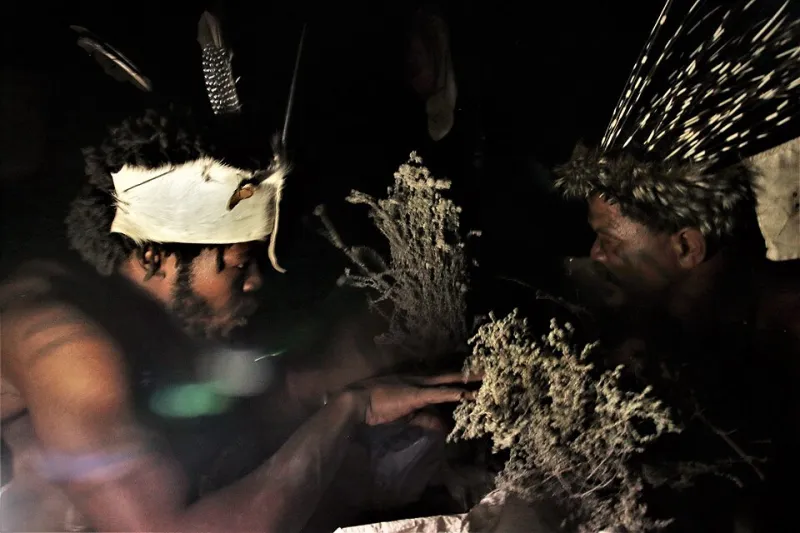
Photo: Kgara Kevin Rack, CC BY-SA 4.0, via Wikimedia Commons
In a small clinic on the outskirts of Nairobi, a healer named Wanjiku Muthoni keeps her knowledge in two places: a worn notebook filled with handwritten plant names and preparation instructions, and her memory, cultivated over 40 years of practice. She learned from her mother, who learned from her grandmother. The chain of transmission is unbroken—but it is fragile. Wanjiku is 71. Her children moved to the city. And the forest where she gathered her most potent medicines has shrunk by nearly half since she was a girl.
"When I am gone," she told a visiting researcher last year, "some of this goes with me."
That quiet urgency is driving one of the most consequential preservation efforts in contemporary science. Across the African continent, ethnobotanists, community health advocates, and digital archivists are working in a race against time to document a pharmacological heritage so vast that researchers believe only a fraction of it has been systematically recorded. What is already known suggests the stakes are enormous—not just for African communities, but for global medicine.
A Pharmacopeia Built Over Millennia
Africa's traditional medicinal knowledge did not emerge from isolated experimentation. It developed through millennia of careful, empirical observation—the same foundational process that underlies modern clinical science, conducted without formal laboratories but with extraordinary rigor. Healers across diverse ecological zones catalogued the properties of plants, minerals, and animal compounds, developed dosage protocols, and refined treatments through generations of applied practice.
The results speak for themselves in the modern pharmaceutical record. Artemisinin, the compound at the heart of the world's most effective malaria treatment, was derived from a plant used in traditional African and Asian medicine long before it entered clinical trials. Reserpine, an early antihypertensive medication that transformed cardiovascular treatment in the mid-20th century, came from Rauwolfia serpentina, a plant whose calming properties were documented by traditional healers across sub-Saharan Africa and South Asia for centuries. The muscle relaxant tubocurarine, used in surgeries worldwide, originates from plant knowledge held by indigenous communities.
These are not coincidences. They are the product of an unacknowledged research tradition—one that the global pharmaceutical industry has benefited from enormously, often without compensation or credit to the communities that generated the knowledge.
The Biopiracy Problem
The term "biopiracy" describes the process by which corporations or research institutions appropriate biological resources and associated traditional knowledge from communities without consent, equitable benefit-sharing, or legal recognition of intellectual ownership. In the context of African medicinal plants, the practice has a long and troubling history.
The case of the hoodia cactus, used for generations by the San people of southern Africa to suppress hunger during long hunts, is among the most cited examples. In the 1990s, the South African Council for Scientific and Industrial Research patented an active compound derived from the plant. A commercial licensing deal followed. The San people, who had never been consulted, received no initial compensation. It took years of advocacy and legal pressure to negotiate a benefit-sharing agreement—and even then, critics argued the settlement was inadequate.
Similar disputes have emerged around the rooibos plant, the devil's claw root, and numerous lesser-known species. The 2010 Nagoya Protocol, an international agreement under the Convention on Biological Diversity, established a framework for access and benefit-sharing. But implementation has been inconsistent, and enforcement mechanisms remain weak. Many African nations lack the legal infrastructure to effectively police patent applications filed in foreign jurisdictions.
"The knowledge was taken without permission for generations," says Dr. Amara Diallo, an ethnobotanist at the University of Dakar who has spent two decades documenting medicinal plant use in West Africa. "Now we are supposed to be grateful for a framework that still puts the burden of proof on the communities. The power imbalance has not fundamentally changed."
The Documentation Race
Against this backdrop, a growing network of researchers and community organizations is pursuing urgent documentation work. The methods vary—some projects use traditional field notebooks and herbarium specimens; others deploy smartphone applications that allow community members to photograph plants, record audio descriptions from healers, and tag GPS coordinates.
The African Ethnobotany Network, a consortium spanning more than a dozen countries, has catalogued over 4,000 medicinal plant species and associated knowledge systems since its founding in 2008. The Tropical Institute of Community Health and Development in Uganda has trained community health workers to serve as documentation partners, embedding the archival process within existing healthcare delivery structures.
Digital preservation introduces its own complications. Who controls the database? Who has access? Can documented knowledge be protected from commercial exploitation once it enters a searchable digital format? These questions do not have simple answers, and different communities have arrived at different conclusions.
Some groups have chosen to maintain what researchers call "defensive documentation"—recording knowledge in formats that establish prior art and thus prevent patenting, while restricting broader public access. Others have partnered with universities to create jointly governed archives with explicit benefit-sharing provisions built into access agreements.
Bridging Knowledge Systems Without Erasing Them
One of the most contested questions in this field concerns the relationship between traditional medicinal knowledge and Western clinical science. Some researchers argue that the most effective path forward is rapid integration—identifying bioactive compounds through laboratory analysis, running clinical trials, and incorporating validated treatments into mainstream medicine. Others, including many African healers and indigenous rights advocates, warn that this approach strips knowledge from its cultural context, reducing a holistic practice to isolated molecular components.
"A plant does not work the same way in a pill as it works in a preparation made with intention, with relationship, with specific timing," says Nomvula Dlamini, a traditional healer and health policy advocate based in Johannesburg. "When you extract the molecule, you get something. But you also lose something. And what you lose belongs to us."
This tension is not irresolvable, but navigating it requires genuine partnership rather than extraction. Several African universities are now developing research protocols that center traditional healers as co-investigators rather than informants—giving them authorship credit, decision-making authority over research design, and direct participation in any commercial arrangements that emerge from findings.
The University of Cape Town's Pharmacology Division has pioneered a consent framework specifically designed for traditional knowledge research, developed in close consultation with healer associations across South Africa. The model is being studied by institutions in the United States, including several schools of pharmacy that are beginning to integrate African pharmacological history into their curricula.
What Is Lost Cannot Be Recovered
For all the progress being made, the losses are real and ongoing. The World Health Organization estimates that approximately 80 percent of the global population relies on traditional medicine as a primary healthcare resource—a figure that underscores how consequential the erosion of this knowledge base truly is. In Africa, where formal healthcare infrastructure remains unevenly distributed, traditional healers serve communities that would otherwise have no medical access at all.
Every elder healer who dies without a successor, every medicinal plant species pushed to extinction by habitat loss, every piece of knowledge that remains undocumented represents an irreversible subtraction from humanity's collective understanding of biology and health.
The work of preservation is, at its core, a form of scientific conservation—as urgent and as morally weighted as any effort to protect an endangered ecosystem. For American audiences accustomed to thinking of medical progress as a forward-moving line originating in laboratories and clinical trials, the lesson of Africa's pharmacological heritage is both humbling and clarifying: much of what we have yet to discover, someone already knew. The question is whether we will learn it in time—and whether, this time, we will ensure that the communities who kept that knowledge safe for generations finally share in its rewards.