Speaking the Future: How Africa's 2,000 Languages Are Quietly Rewriting the Rules of Artificial Intelligence
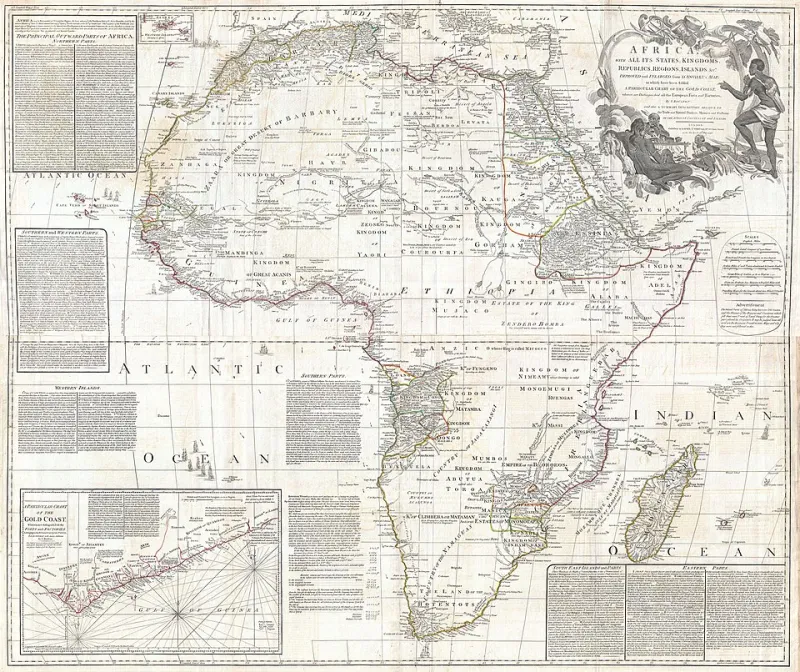
Photo: Sunkanmi12, CC BY-SA 4.0, via Wikimedia Commons
When most Americans imagine the cutting edge of artificial intelligence, they picture gleaming server farms in California or the polished campuses of companies like Google and OpenAI. Rarely does the imagination travel to Lagos, Addis Ababa, or Kampala — yet it is precisely in these cities, and in the research institutions and grassroots tech communities embedded within them, that some of the most transformative work in global AI development is now taking place.
Africa is home to an estimated 2,000 to 3,000 distinct languages, representing roughly one-third of all human languages on Earth. For most of the digital age, this extraordinary wealth of expression has been treated as an obstacle rather than an asset — a complexity too vast for early internet infrastructure and, later, too niche for the commercial calculus of major technology platforms. That calculus is changing, and the implications reach far beyond the continent itself.
The Language Gap in Artificial Intelligence
Modern AI systems — the large language models powering everything from customer service chatbots to medical diagnostics — are trained overwhelmingly on text scraped from the English-language internet. According to researchers at the University of Cape Town's South African Centre for Digital Language Resources, more than 90 percent of the world's languages remain effectively invisible to current AI training datasets. For African languages, this invisibility is not merely an inconvenience; it is a structural inequality with real consequences.
Consider the practical stakes: a Yoruba-speaking entrepreneur in southwestern Nigeria attempting to access a digital banking platform receives a demonstrably inferior experience compared to her English-speaking counterpart. A Somali refugee in Minneapolis attempting to navigate health information online may encounter automated systems that cannot process her native language at all. When AI systems fail to understand, translate, or generate text in African languages, they do not simply inconvenience speakers — they systematically exclude hundreds of millions of people from the full benefits of the digital economy.
Dr. Jade Abbott, a South African machine learning researcher and co-founder of the Masakhane initiative, has described this exclusion with characteristic precision: "If the AI doesn't speak your language, the AI doesn't work for you."
Masakhane and the Community-Driven Response
Founded in 2019, Masakhane — a Nguni word meaning "we build together" — has become one of the most celebrated examples of community-led AI development in the world. What began as a loose network of African researchers attempting to build machine translation tools for languages like Zulu, Hausa, and Amharic has grown into a global research collaborative with contributors on six continents and publications in top-tier academic venues.
The project's methodology is as significant as its outputs. Rather than relying on centralized data collection by large corporations, Masakhane mobilizes native speakers, linguists, and local technologists as co-creators of the datasets and models themselves. This participatory approach addresses a persistent flaw in conventional AI development: the assumption that a small group of well-resourced engineers can adequately represent the communicative needs of communities they have never inhabited.
For American audiences familiar with debates about algorithmic bias and representational fairness in AI — debates that have gained considerable urgency following high-profile failures of facial recognition and predictive policing tools — Masakhane's framework offers a compelling model. The community-centered approach does not merely improve technical performance; it redistributes the authority to define what good performance means.
The Corporate Awakening
US-based technology companies have not been indifferent to these developments. Google has invested substantially in its African Language Program, which has produced keyboard tools, voice recognition capabilities, and translation services for languages including Swahili, Yoruba, Igbo, and Amharic. Meta has funded research through its AI for Social Good initiative, with a particular emphasis on low-resource language translation. Microsoft's AI for Good program has supported several African language digitization projects in partnership with universities across the continent.
Yet critics — including many of the African researchers most actively engaged in this work — argue that corporate investment, while welcome, has frequently been extractive in character. Data generated by African communities has sometimes been incorporated into commercial products without meaningful revenue sharing or governance rights returned to those communities. The linguistic labor of native speakers, often recruited as volunteer annotators, has created commercial value that accumulates primarily in Northern California rather than in the communities that made it possible.
This tension is not merely an abstract ethical concern. It reflects a deeper question about who owns the future of African languages in digital space — and whether the integration of those languages into global AI will ultimately serve African speakers or simply expand the market reach of already-dominant technology platforms.
The Linguistic Architecture of the Continent
Understanding why this work is technically demanding requires appreciating the genuine complexity of African linguistic diversity. The continent's languages span at least five major families — Niger-Congo, Afroasiatic, Nilo-Saharan, Khoisan, and Austronesian (in Madagascar) — each with its own grammatical logic, tonal structure, and writing system conventions.
Amharic, the official language of Ethiopia and one of the most widely spoken Semitic languages in the world, employs the Ge'ez script, a writing system with no connection to the Latin alphabet that poses particular challenges for optical character recognition and text digitization. Yoruba, spoken by more than 40 million people across West Africa and in diaspora communities throughout the United States and the Caribbean, is a tonal language in which the same sequence of consonants and vowels carries entirely different meanings depending on pitch — a feature that standard keyboard interfaces were never designed to capture.
Swahili, perhaps the most recognized African language among American audiences, has fared comparatively better in the digital transition, partly because of its widespread use as a lingua franca across East Africa and its relatively straightforward orthography. But even Swahili's digital representation remains thin compared to languages with far smaller speaker populations in Europe.
Why This Matters for American Educators and Policymakers
For educators and policymakers in the United States, the emergence of African languages as a frontier in AI development carries specific implications. American universities are increasingly recruiting African students and faculty whose research expertise spans computational linguistics, natural language processing, and African language documentation — fields that are converging in ways that were barely imaginable a decade ago.
At the same time, the growing African diaspora in cities like Houston, Washington, D.C., Minneapolis, and Atlanta is creating domestic demand for digital tools that support multilingual communication in Amharic, Somali, Tigrinya, Twi, and dozens of other African languages. Community organizations, healthcare providers, and public school systems serving these populations have a direct stake in the quality and availability of African language AI tools.
The story of African languages and artificial intelligence is, at its core, a story about whose knowledge counts — and who gets to shape the communicative infrastructure of the twenty-first century. At Kradjabeba, we believe that uncovering the depth and sophistication of Africa's linguistic heritage is inseparable from understanding the forces that will define our collective future. The engineers and linguists building these tools are not simply solving a technical problem. They are insisting, with every dataset and every model they build, that the future must be legible to everyone.
The world is finally beginning to listen.