Stone, Water, and Ingenuity: The African Engineering Traditions That Built the Ancient World
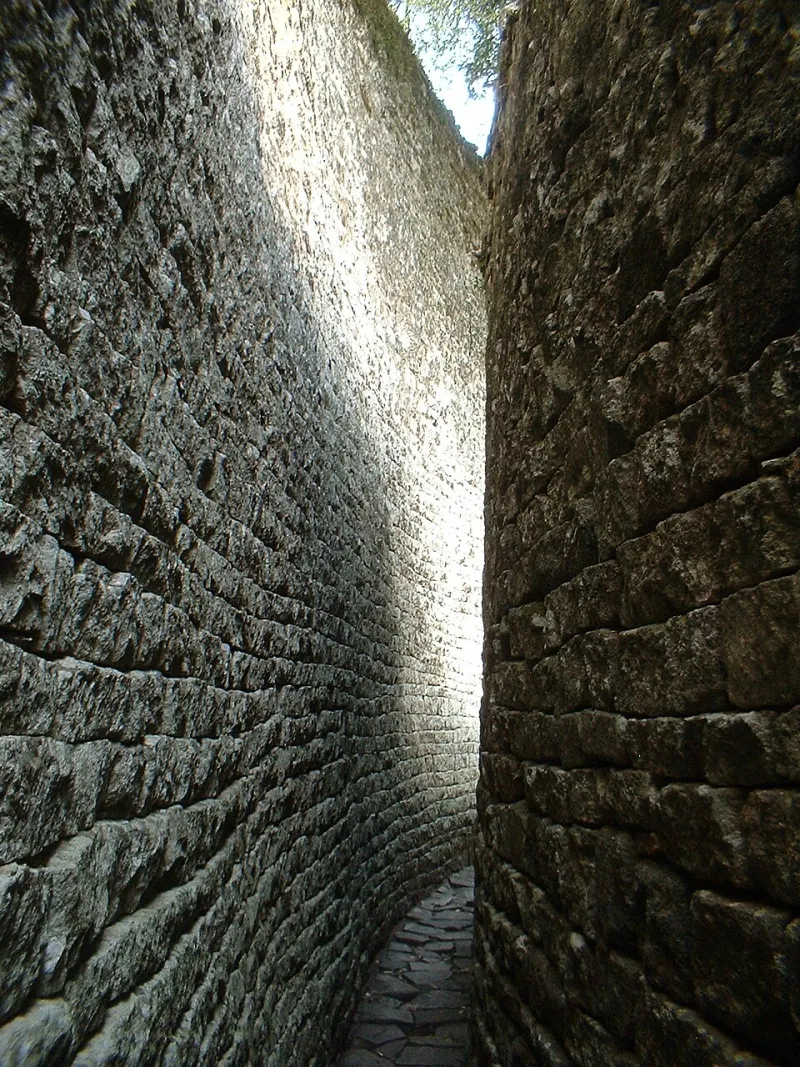
Photo: andryn2006, CC BY-SA 2.0, via Wikimedia Commons
When American engineering students open their textbooks, the story of construction typically begins in Greece, pivots through Rome, and accelerates into the European Renaissance. Africa appears, if at all, as a footnote—a continent that received knowledge rather than generated it. That narrative is not only incomplete; it is demonstrably false. Across millennia and thousands of miles, African engineers developed structural, hydraulic, and material innovations that rival anything produced by their contemporaries on other continents. Understanding those contributions is not merely an academic exercise. It is a matter of historical justice.
The Dry-Stone Mastery of Great Zimbabwe
Rising from the southeastern African plateau in what is now the modern nation of Zimbabwe, the ruins of Great Zimbabwe represent one of the most sophisticated feats of pre-industrial construction anywhere on Earth. Built primarily between the 11th and 15th centuries CE by the ancestors of the Shona people, the complex encompasses roughly 1,800 acres and includes structures whose walls reach nearly 36 feet in height and 20 feet in thickness at their base.
What makes Great Zimbabwe extraordinary from an engineering standpoint is not merely its scale—it is its method. The builders used no mortar. Every granite block was shaped and fitted with such precision that the walls have withstood centuries of weathering, seismic activity, and colonial-era vandalism. The elliptical Great Enclosure, the largest ancient structure in sub-Saharan Africa, demonstrates a nuanced understanding of load distribution, drainage, and passive ventilation that structural engineers today recognize as genuinely sophisticated.
Early European colonizers, confronted with evidence that contradicted their assumptions about African intellectual capacity, invented elaborate alternative explanations—attributing the site to Phoenicians, ancient Israelites, or other non-African builders. The Rhodesian government actively suppressed archaeological findings that confirmed African authorship as late as the 1970s. It took decades of sustained scholarship, much of it by African researchers, to restore the historical record.
Nubia's Hydraulic Revolution
South of Egypt, along the Nile's upper reaches, the Nubian kingdoms of Kerma, Kush, and Meroë developed water management systems that were engineering marvels of the ancient world. The hafir—a large earthen reservoir designed to capture seasonal floodwaters—allowed Nubian communities to sustain agriculture in semi-arid conditions that would otherwise have been impossible to cultivate. Engineers designed these structures with precise understanding of soil permeability, evaporation rates, and catchment geometry.
At Meroë, the capital of the Kushite kingdom from roughly 300 BCE to 350 CE, archaeologists have identified an extensive network of underground water storage chambers, surface canals, and sluice systems. The Meroitic engineers demonstrated an awareness of groundwater behavior that would not be formally theorized in European hydrology for another thousand years. Recent research published by the University of Khartoum has suggested that Meroitic hydraulic principles may have influenced water management practices in the Arabian Peninsula through trade networks that connected the Red Sea corridor.
Mali's Urban Architecture and the Sudano-Sahelian Tradition
The medieval empires of West Africa—Ghana, Mali, and Songhai—produced an architectural tradition whose influence extended far beyond the Sahara. The Sudano-Sahelian style, characterized by thick earthen walls, protruding wooden beams called toron, and organic sculptural forms, was not simply an aesthetic choice. It was a climate-responsive engineering solution.
The Great Mosque of Djenné in present-day Mali, reconstructed in its current form in 1907 but built on foundations dating to the 13th century, is the world's largest mud-brick structure. Its walls function as thermal mass, absorbing daytime heat and releasing it slowly at night—a passive cooling strategy that modern green architects now replicate deliberately. The toron serve a dual purpose: they are simultaneously decorative and structural, providing scaffolding anchor points for the annual community replastering that maintains the building's integrity. This participatory maintenance model embeds engineering knowledge directly into cultural practice, ensuring that technical expertise is transmitted across generations without formal institutions.
American architects engaged in sustainable design have increasingly looked to this tradition for inspiration, though acknowledgment of its African origins remains inconsistent in professional literature.
Aksum's Monolithic Ambitions
In the highlands of what is now northern Ethiopia, the Aksumite Empire produced a class of engineering achievement that continues to puzzle researchers: the stelae of Aksum. These monolithic granite obelisks, some exceeding 100 feet in height and weighing over 500 tons, were quarried, transported, carved, and erected between roughly the 1st and 7th centuries CE. The largest stele ever attempted—now lying fractured on the ground—would have been the tallest single-stone monument ever raised by any civilization.
The logistics of moving stones of this scale without wheeled vehicles or draft animals of sufficient size, across terrain that includes significant elevation changes, implies a level of organizational engineering—planning, labor coordination, tool design—that rivals the pyramid-building operations of Egypt. Aksumite engineers also developed a distinctive interlocking architectural technique for their multi-story palaces, using alternating courses of stone and timber that provided earthquake resilience in a seismically active region.
Why the Curriculum Hasn't Caught Up
The exclusion of these traditions from American engineering and architecture education is not simply a matter of gaps in the historical record. It reflects a structural bias in which "universal" knowledge is implicitly coded as European, and non-Western contributions are categorized as anthropological curiosities rather than technical achievements worthy of professional study.
Organizations including the National Society of Black Engineers and several historically Black colleges and universities have begun developing supplementary curricula that integrate African engineering history into undergraduate coursework. Scholars at institutions including Howard University and Morgan State University are producing peer-reviewed research that situates African construction traditions within the broader history of structural science.
For the broader public, the stakes extend beyond academic fairness. As the United States confronts urgent challenges in sustainable infrastructure, climate-adaptive design, and community-centered construction, the engineering traditions developed across African civilizations offer tested, proven models. Ignoring them is not neutrality—it is a choice that costs us knowledge we can ill afford to waste.
The stones of Great Zimbabwe, the reservoirs of Meroë, and the living walls of Djenné are not relics. They are data. And the discipline of engineering will be more complete the day it finally reads them.