The Oldest Science on Earth: How Africa's Environmental Wisdom Is Rewriting the Climate Playbook
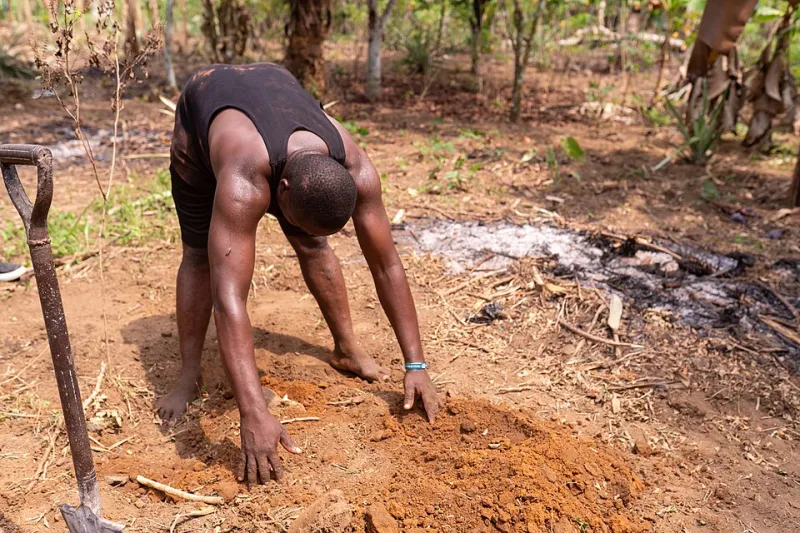
Photo: Otomeonoge, CC BY 4.0, via Wikimedia Commons
In the spring of 2023, researchers from the International Crops Research Institute for the Semi-Arid Tropics published findings on a farming technique called zaï—a system of planting pits used for centuries by farmers in Burkina Faso to capture rainfall and restore degraded soil. The study confirmed what local communities had long understood: zaï not only increases crop yields by up to 500 percent in severely eroded land but also sequesters carbon and rebuilds soil microbial ecosystems. The scientific community hailed it as a promising climate adaptation tool. For the Mossi people of Burkina Faso, it was simply Tuesday.
This gap—between what Western science is only now validating and what African communities have practiced for generations—is the central paradox at the heart of contemporary climate policy. And it is a paradox that researchers, environmental advocates, and policymakers in the United States are increasingly being forced to confront.
What Traditional Ecological Knowledge Actually Means
The term traditional ecological knowledge, or TEK, has become common in academic and policy circles, but it is worth pausing on what the phrase actually encompasses. TEK is not superstition or folklore dressed up in scientific language. It is, rather, a body of systematically accumulated, empirically tested, and intergenerationally transmitted understanding of how ecosystems function—developed through sustained observation of specific landscapes over centuries or even millennia.
In the African context, TEK includes drought prediction systems based on astronomical and biological indicators; water harvesting architectures capable of sustaining agriculture in arid environments; fire management regimes that maintain savanna biodiversity; coastal fisheries management protocols that prevent stock depletion; and forest governance systems that have maintained canopy cover in regions where neighboring areas have experienced severe deforestation.
The knowledge is not static. It is adaptive, responsive, and sophisticated—exactly the qualities that climate scientists say are most needed in an era of accelerating environmental change.
Reading the Sky, Reading the Land
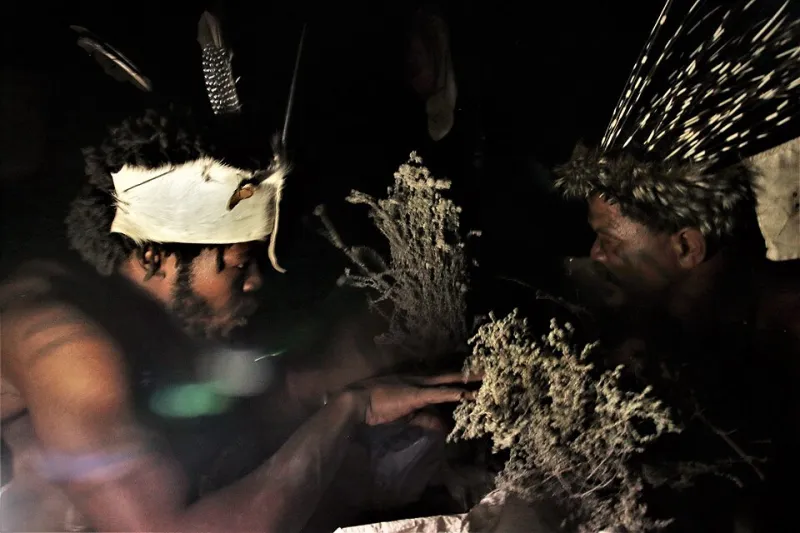
In communities across the Sahel and the East African highlands, traditional weather forecasters—sometimes called agrometeorologists by researchers who study them—have developed indicator systems of remarkable accuracy. In Ethiopia, elders in the Borana pastoralist community read the behavior of specific bird species, the flowering patterns of indicator plants, and the configuration of star clusters to predict the timing and intensity of seasonal rains. Studies conducted by researchers at the International Livestock Research Institute have found that Borana forecasts, when integrated with satellite-based meteorological data, produce more reliable local predictions than either system generates alone.
This is not a minor finding. In a country where smallholder farmers make planting and migration decisions based on rainfall forecasts, the difference between an accurate and an inaccurate prediction can mean the difference between a successful harvest and a catastrophic food shortage. The practical stakes of taking indigenous knowledge seriously are, quite literally, matters of life and death.
Similar dynamics are at work across the continent. In West Africa, the Dogon people of Mali have maintained astronomical observation traditions that predate the introduction of telescopes by centuries. In southern Africa, San communities in the Kalahari have developed tracking and ecological reading skills so precise that conservation biologists have begun formally incorporating San trackers into wildlife monitoring programs.
Water Wisdom the World Needs
Water scarcity is projected to be among the most severe consequences of climate change in the coming decades. By 2050, according to United Nations projections, more than five billion people worldwide could face inadequate access to water. In this context, Africa's indigenous water management traditions represent an enormously valuable—and enormously underutilized—resource.
The tassa system of Niger, like the zaï pits of Burkina Faso, involves micro-catchment techniques that concentrate rainfall around individual plants, allowing agriculture in regions receiving as little as 300 millimeters of rain annually. In Morocco and Algeria, the khettara system—a network of underground channels that tap into aquifers without depleting them—has sustained oasis agriculture for over a thousand years. In the Ethiopian highlands, communities have maintained dagusha terracing systems that prevent soil erosion and retain moisture on steep slopes, techniques that modern hydrologists recognize as highly effective responses to the rainfall variability now being intensified by climate change.
These are not primitive workarounds. They are engineering solutions refined over centuries of trial, observation, and adaptation—precisely the kind of long-horizon empirical testing that laboratory science struggles to replicate.
Bridging Two Ways of Knowing
The most exciting developments in this field are happening where traditional knowledge holders and formally trained scientists are working together as genuine partners rather than in the extractive relationships that have historically characterized Western research in Africa.
Dr. Yvonne Baskin, a science writer who has covered African conservation extensively, has noted a significant shift in how international environmental organizations approach indigenous knowledge. "There's been a real reckoning," she observed in a recent interview, "with the fact that conservation programs imposed from outside—without local knowledge, without local buy-in—have repeatedly failed. The programs that work are the ones that start by listening."
That listening is now happening in more formal institutional settings. The Intergovernmental Panel on Climate Change's most recent assessment reports have, for the first time, included substantive sections on indigenous and local knowledge systems, explicitly recognizing their relevance to both mitigation and adaptation strategies. The African Union's Great Green Wall initiative—an ambitious project to restore 100 million hectares of degraded land across the Sahel—has increasingly incorporated traditional land management practices alongside modern agroforestry science.
In the United States, organizations such as the African Wildlife Foundation have been working to communicate these lessons to American audiences, arguing that the climate solutions most urgently needed are often already in existence—embedded in communities that Western institutions have historically dismissed or ignored.
The Political Dimensions of Environmental Knowledge
It would be naive to discuss African TEK without acknowledging the political context in which it exists. The same colonial structures that suppressed African mathematical and scientific traditions also actively dismantled indigenous land management systems, replacing them with extractive agricultural regimes that accelerated the very environmental degradation now driving the climate crisis. Recognizing traditional ecological knowledge as legitimate science is therefore not only an intellectual correction; it is an act of historical justice.
Furthermore, the incorporation of African TEK into global climate frameworks raises important questions of intellectual sovereignty. Who controls the knowledge? Who benefits from its application? Who is credited when a traditional farming technique becomes a celebrated climate innovation? These are questions that African scholars, policymakers, and community leaders are actively raising, and they deserve serious engagement from the international institutions now eager to mine African environmental wisdom for solutions.
A Different Kind of Climate Leadership
America's public conversation about climate change has been dominated by debates over technology: carbon capture, renewable energy infrastructure, electric vehicles. These are important conversations, but they reflect a particular assumption—that the solutions to our environmental crisis must be invented anew, by technologists working in the future.
Africa's environmental traditions suggest a different and complementary approach: that some of the most powerful solutions are already here, embedded in landscapes and communities that have been managing their relationship with the natural world for longer than any other human societies on Earth. Learning from them is not nostalgia. It is, arguably, the most scientifically rigorous thing we could do.
At Kradjabeba, we believe that uncovering Africa's stories means taking seriously not only its past but its present—the living knowledge systems, the working scientists, and the communities that are already, quietly, modeling the sustainable futures the rest of the world is still struggling to imagine.