Counting the Cosmos: How African Mathematical Traditions Quietly Shaped the World's Markets
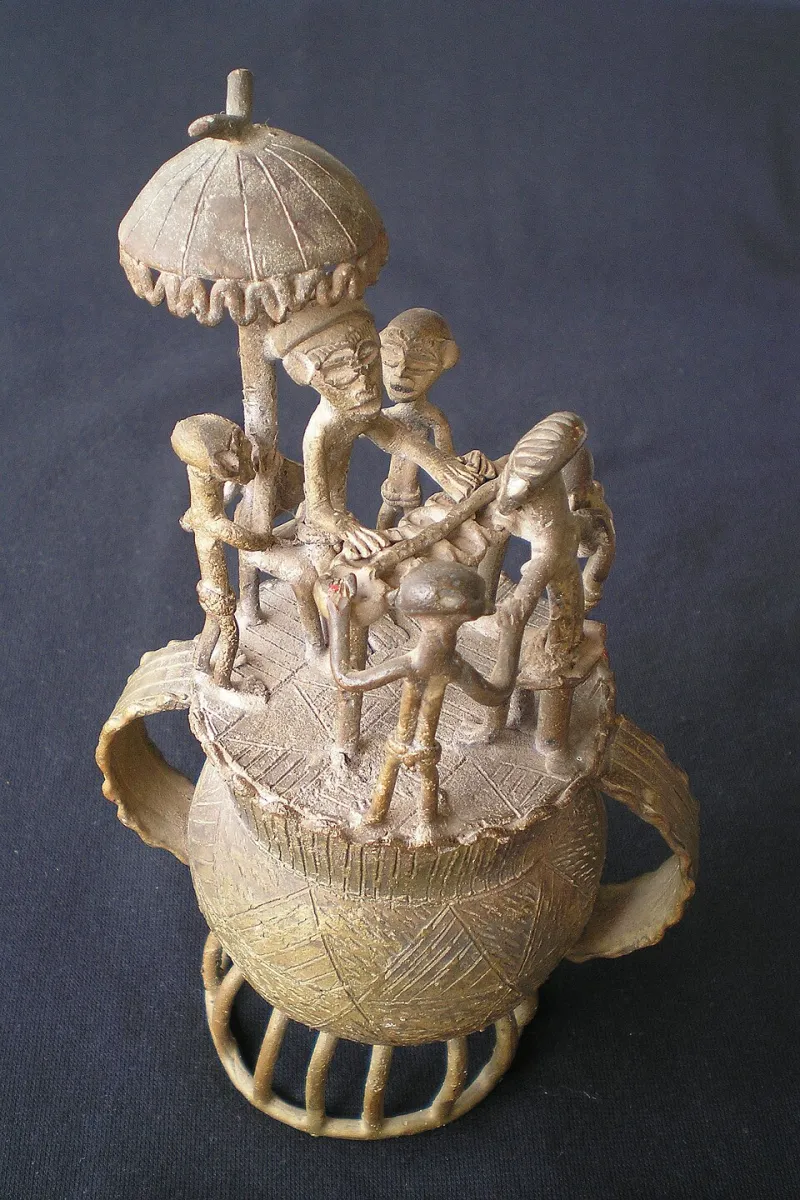
Photo: ZSM, CC BY-SA 3.0, via Wikimedia Commons
When American students open a mathematics textbook, the story usually begins in ancient Greece, detours briefly through the Arab world, and arrives—seemingly inevitably—at European Renaissance thinkers who supposedly gave us algebra, geometry, and the principles underpinning modern finance. That narrative is not only incomplete; it is, in important respects, misleading. Across the African continent, from the highlands of Ethiopia to the trading floors of Timbuktu, mathematical systems of remarkable sophistication were being developed, refined, and exported long before those European milestones were reached.
At Kradjabeba, our mission is to recover and illuminate precisely these overlooked histories. The mathematics of Africa is one of the most consequential—and most systematically ignored—chapters in that larger story.
The Ishango Bone and the Roots of Numerical Thinking
The conversation must begin with the Ishango bone, a carved baboon fibula discovered near the Congo River in what is now the Democratic Republic of Congo, dated to approximately 20,000 BCE. Its series of notched tally marks have led researchers, including Belgian geologist Jean de Heinzelin and later mathematicians, to argue that it represents an early engagement with prime numbers and lunar cycles. Whether or not one accepts the most ambitious interpretations, the artifact stands as physical evidence that structured numerical reasoning on the African continent predates any comparable record elsewhere on Earth.
This is not a curiosity or an asterisk. It is a foundational data point that demands a reorientation of how we understand the origins of human mathematical thought.
Ethiopian Calendrics and the Mathematics of Time
Mathematics is not only about counting objects; it is equally about measuring time, and few civilizations have engaged that challenge with greater precision than ancient Ethiopia. The Ethiopian calendar—known as the Ge'ez calendar—is a solar-based system that divides the year into thirteen months, twelve of thirty days each and one of five or six days. Its construction required deep astronomical observation and the kind of iterative calculation that, in any other cultural context, would be celebrated as a landmark of scientific achievement.
The calendar's influence extended well beyond Ethiopia's borders. Coptic Christian communities in Egypt adopted closely related systems, and trade caravans moving between the Horn of Africa and the Arabian Peninsula carried these temporal frameworks into networks that would eventually link three continents. When merchants needed to coordinate the timing of seasonal markets, settle debts across long distances, or predict monsoon patterns favorable to maritime trade, they were drawing on mathematical infrastructure that Ethiopian scholars had spent generations constructing.
West African Trade Mathematics: Precision at Scale
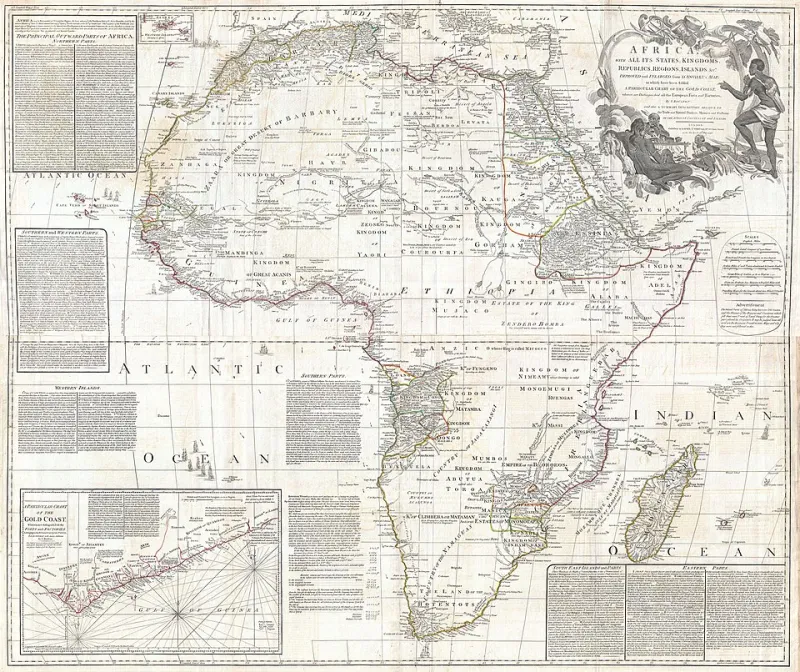
Perhaps nowhere is the practical genius of African mathematics more evident than in the commercial systems of West Africa. The trans-Saharan trade network, at its height between roughly 800 and 1600 CE, was one of the largest and most complex economic systems in the premodern world. Gold, salt, kola nuts, cloth, and enslaved people moved across thousands of miles of desert and savanna, coordinated by merchants whose accounting practices required sophisticated arithmetic.
The Akan peoples of present-day Ghana developed a system of brass weights—known as mmirikyi or gold weights—that encoded mathematical relationships with extraordinary precision. These weights, cast in geometric and figurative forms, were used to measure gold dust, the primary currency of the region. Crucially, the system was not merely additive; it incorporated multiplicative and proportional logic, allowing merchants to calculate exchange rates across different regional standards. Scholars such as Akan historian Ivor Wilks have documented how this system enabled economic transactions of a complexity that rivaled the commercial arithmetic being practiced simultaneously in Italian city-states.
Further north, in the intellectual powerhouse of Timbuktu, scholars at the Sankore Mosque and its associated universities were producing mathematical manuscripts that covered everything from inheritance calculations rooted in Islamic jurisprudence to geometric methods for land surveying. The Ahmed Baba Institute in Mali currently holds thousands of these manuscripts, many still awaiting full scholarly analysis. What has been examined confirms that West African mathematical culture was not derivative of external traditions but was a generative intellectual environment in its own right.
Geometric Traditions and Architectural Precision
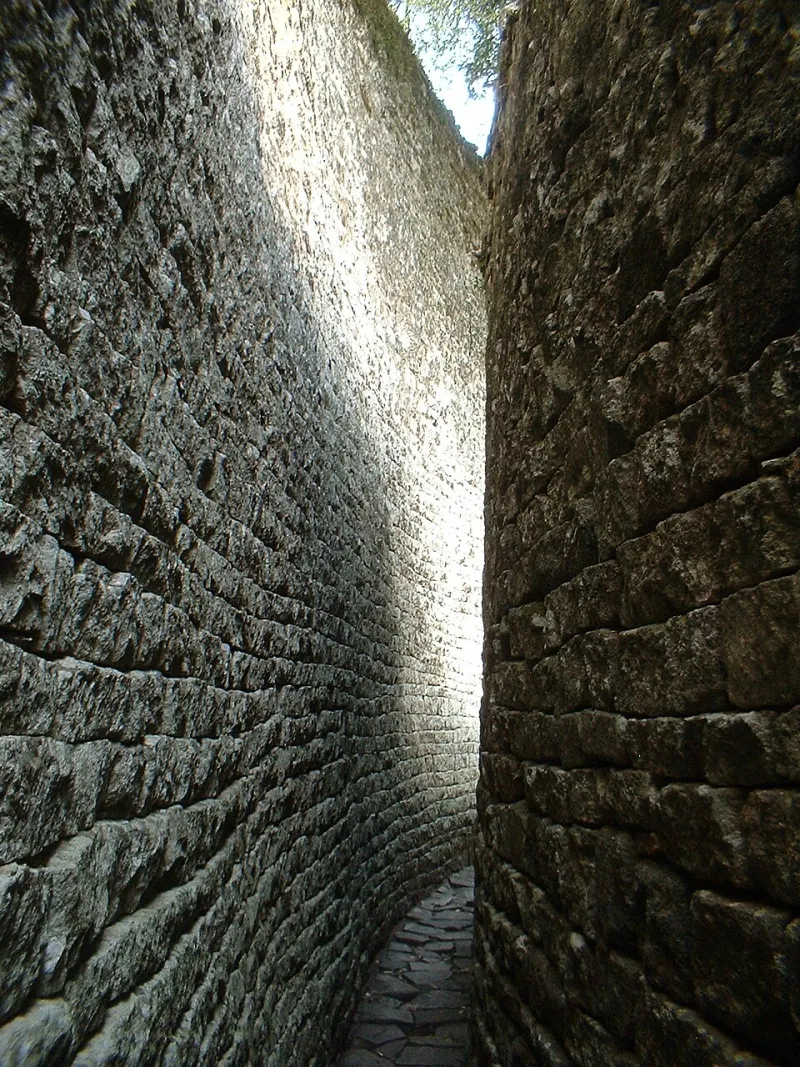
African mathematical sophistication is also visible in the built environment. The Great Enclosure at Great Zimbabwe, constructed between the eleventh and fifteenth centuries, required its builders to solve non-trivial geometric problems. Its outer wall, nearly 800 feet in circumference and up to 36 feet high, was constructed without mortar, yet has maintained structural integrity for centuries. The precision required to lay granite blocks in courses that distribute weight correctly across curved surfaces presupposes a working knowledge of geometric principles that Western archaeology has been slow to credit.
Similarly, the fractal geometry embedded in traditional West and Central African design—documented extensively by mathematician Ron Eglash in his landmark study African Fractals—suggests that African artisans and architects were engaging intuitively, and in some cases explicitly, with mathematical concepts that European mathematicians would not formalize until the late nineteenth and early twentieth centuries.
Implications for Mathematical Pedagogy in America Today
Why does any of this matter to a reader in Chicago, Atlanta, or Seattle in the twenty-first century? The answer lies in both justice and utility. American mathematics education has a well-documented equity problem: Black and Latino students are consistently underrepresented in advanced mathematics courses, a gap that has profound consequences for career trajectories and economic mobility. Research in culturally responsive pedagogy consistently shows that students engage more deeply with material when they can locate themselves and their ancestral communities within it.
When African American students are taught that mathematical thinking is a fundamentally human capacity with deep roots in African civilization—rather than a gift bequeathed by distant European geniuses—the psychological and motivational effects can be transformative. Organizations such as the Algebra Project, founded by civil rights activist Bob Moses, have long argued that mathematical literacy is a civil rights issue. Incorporating the full history of African mathematical innovation into that framework gives the argument both greater depth and greater accuracy.
Recovering What Was Obscured
The marginalization of African mathematics from global intellectual history was not accidental. It was produced by specific historical forces: colonial educational systems designed to establish European intellectual supremacy, the destruction and dispersal of African archival materials, and the persistent tendency of Western scholarship to treat African knowledge systems as folklore rather than science.
Reversing that distortion requires deliberate effort. It requires institutions—universities, museums, school districts, and media organizations—to actively commission research, develop curricula, and create public narratives that restore African mathematical traditions to their rightful place in the human story.
At Kradjabeba, we believe that uncovering these stories is not merely an academic exercise. It is an act of intellectual repair with consequences that extend into classrooms, boardrooms, and communities across the United States and the world. The architects of our numerical universe were more diverse, more African, and more brilliant than most of us were ever taught. It is long past time to acknowledge them.