Beyond the Transaction: How Silicon Valley Is Quietly Borrowing from Africa's Ancient Economies of Reciprocity
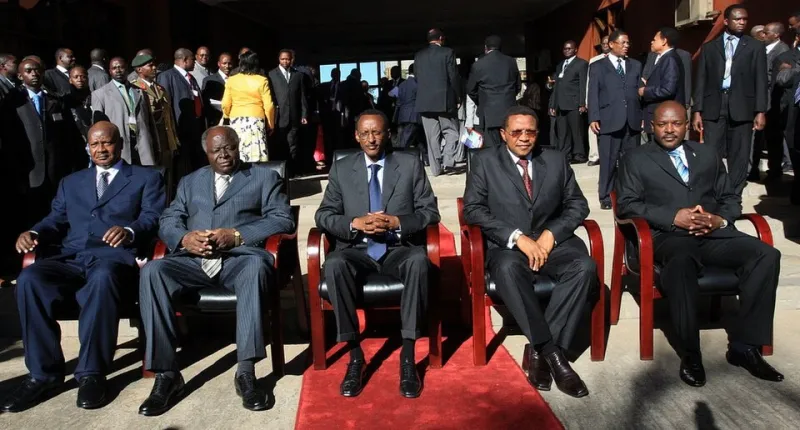
Photo: nukta77, CC BY-SA 2.0, via Wikimedia Commons
When "Free" Is Never Really Free
In the Akan tradition of Ghana, there is a concept embedded in daily life that resists easy translation into the language of modern economics: the idea that giving is not an act of generosity so much as an act of investment—not in profit, but in people. When a farmer shares surplus harvest with a neighbor, the expectation is not a receipt or a repayment date. What is expected is relationship. What is cultivated is trust. What is built, over time, is a community resilient enough to survive drought, conflict, and change.
For decades, Western economists classified such arrangements as pre-modern inefficiencies—charming relics of societies that had not yet discovered the liberating logic of market exchange. That dismissal is now being quietly reconsidered, not in academic journals alone, but in the open-plan offices of San Francisco, Austin, and Seattle.
The Gift Economy, Defined on Its Own Terms
Before examining how these principles are being applied in contemporary business, it is worth understanding what African gift economies actually are—and what they are not. Scholars of African economic history, including Dr. Ndidi Okonkwo Nwuneli, a Nigerian business strategist widely respected in development circles, have long cautioned against romanticizing these systems or flattening their complexity.
African gift economies are not charity. They are not barter. They are sophisticated, rule-governed networks of reciprocal obligation in which the timing, scale, and nature of return giving are shaped by social context, relationship depth, and community standing. Among the Igbo of southeastern Nigeria, the oji cola nut ceremony encodes entire hierarchies of relationship and obligation within a single shared ritual. Among the Maasai of East Africa, cattle gifting ceremonies called osotua create bonds of mutual aid that can be activated in times of genuine need—but never exploited for mere convenience. The distinction matters enormously.
These are economies built on what anthropologists call "delayed reciprocity"—the understanding that what you give today will return to you, transformed, through social channels that no algorithm could fully map.
From Nairobi to the Valley: The Unlikely Translation
The technology sector's current fascination with non-transactional models did not emerge from a sudden appreciation of African philosophy. It emerged from a business problem. As user acquisition costs soared, as subscription fatigue set in among consumers, and as the reputational costs of pure extractive data models became impossible to ignore, a growing number of companies began searching for frameworks that could generate loyalty without demanding immediate payment.
What some found, often without initially recognizing its origins, were principles that African communities had formalized long ago.
Consider the open-source software movement, which operates almost entirely on the logic of gift exchange: contributors donate labor, knowledge, and time with no contractual guarantee of return, trusting that the community will sustain them. Linux, Python, and countless foundational tools of the modern internet were built on this premise. Yochai Benkler, the Harvard legal scholar who popularized the term "commons-based peer production," noted in his seminal work that such systems defied conventional economic prediction—yet they produced some of the most durable and widely used technology in history.
What Benkler did not fully explore, and what African economists have since begun to articulate publicly, is that commons-based production has deep structural parallels with African communal labor traditions such as harambee in Kenya—a Swahili term meaning "all pull together"—and the West African susu, a rotating savings and credit association that operates entirely on trust and social accountability rather than legal contract.
Case Studies: Companies That Are Getting It (Partially) Right
Several American companies have begun integrating reciprocity-based principles into their core operating models, with varying degrees of intentionality and success.
Patagonia has built an entire brand identity around what it calls "responsible commerce," offering repair services, encouraging customers not to overbuy, and donating a portion of revenue to environmental causes. The logic is explicitly anti-transactional: the company invests in the long-term wellbeing of its customer community, trusting that loyalty will follow. African economists who study communal exchange recognize this structure immediately.
Duolingo, the language-learning platform, offers its core product entirely free, sustained by a community of volunteer translators and learners whose contributions improve the platform for everyone. The company has spoken openly about designing for "intrinsic motivation"—a concept that maps closely onto the social incentives that govern African gift networks.
Notion and several other productivity software companies have embraced "pay what you can" or freemium models that prioritize community growth over immediate monetization, betting that a large, invested user base will ultimately generate more sustainable revenue than a smaller, purely transactional one.
Dr. Celestin Monga, a Cameroonian economist who has served at both the World Bank and the African Development Bank, has argued in his writing that Western corporations rediscovering these principles tend to extract the mechanics while discarding the ethics. "The gift economy works," he has written, "because it is embedded in accountability. When you remove the social consequences of failing to reciprocate, you do not have a gift economy. You have a marketing strategy."
His warning is pointed. Several tech companies have been criticized for deploying the language of community and reciprocity while continuing to monetize user data in ways that violate the spirit, if not the letter, of genuine mutual exchange.
What the West Gets Wrong
The most significant misreading of African gift economy principles by Western adopters is the assumption that the "gift" is the product and the "return" is brand loyalty or data. In traditional African reciprocity frameworks, both the giving and the receiving carry social weight. Accepting a gift creates obligation. Refusing one can sever a relationship. The system is not asymmetrical in the way that corporate freemium models tend to be.
African tech entrepreneurs operating on the continent are, in some respects, closer to the original framework. Platforms like M-Pesa in Kenya, which began as a mobile money transfer service and evolved into a sprawling financial ecosystem, succeeded in large part because they were designed around existing social networks of trust and mutual obligation rather than against them. The platform did not try to replace the susu; it digitized its logic.
A Heritage Worth Crediting
For Kradjabeba, the deeper question raised by this conversation is one of acknowledgment. When Silicon Valley companies speak of "community-led growth" or "relationship-based commerce," they are, knowingly or not, drawing on intellectual and cultural traditions that African communities developed and sustained across centuries of economic life. Those traditions deserve to be named, credited, and studied on their own terms—not simply mined for frameworks that can be stripped of their origins and repackaged as innovation.
The gift economy of the Akan, the osotua of the Maasai, the harambee of Kenya—these are not quaint antecedents to modern business thinking. They are sophisticated, time-tested systems of human organization that have much to teach a global economy still learning, painfully, that transactions without relationships tend not to last.
Silicon Valley is beginning to understand what Africa has long known. The least it can do is say so.