The Uncharted Billions: How African Informal Trade Networks Are Quietly Running the Global Economy
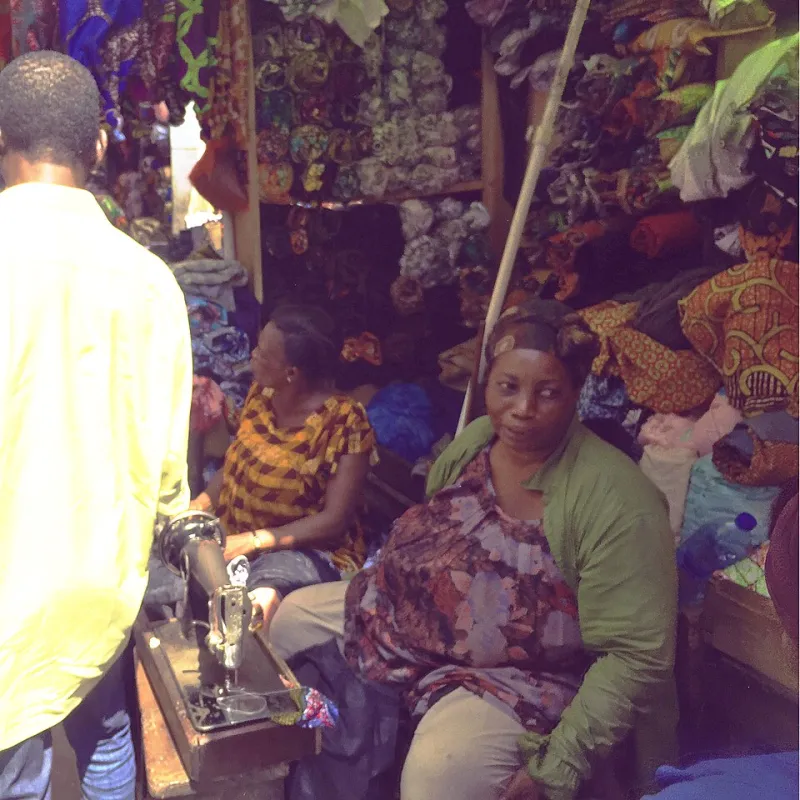
Photo: Kyngky, CC BY-SA 4.0, via Wikimedia Commons
Somewhere in a Chicago neighborhood, a Ghanaian shopkeeper places a phone order that will, within seventy-two hours, set in motion a chain of transactions spanning three continents — none of which will appear in a standard trade database, none of which will be intermediated by a conventional bank, and all of which will be completed with a reliability that would impress a Fortune 500 logistics director. The system that makes this possible is not new. It is, in fact, ancient. And it is reshaping global commerce in ways that most American consumers have never been invited to consider.
African informal trade networks — a term that already undersells them — represent an estimated two-thirds of sub-Saharan Africa's employment and a significant share of the continent's GDP. But their influence does not stop at African borders. Through diaspora communities, commodity corridors, and trust-based financing systems with roots stretching back centuries, these networks touch supply chains that reach into American homes, American businesses, and American financial institutions. The invisibility of that influence is not accidental. It is, in part, the product of an economic vocabulary that was built to see certain kinds of commerce and not others.
Ancient Routes, Contemporary Goods
The trans-Saharan trade routes that connected sub-Saharan Africa to Mediterranean markets for over a millennium did not disappear when colonial powers drew new borders across them. They adapted. The corridors that once moved gold, salt, and kola nuts now move electronics, textiles, pharmaceuticals, and agricultural commodities — still operated, in many stretches, by trading families whose commercial relationships predate the nation-states through which they now technically pass.
The Agadez corridor in Niger, for instance, remains a significant transit point for goods moving between West Africa and North Africa, continuing a commercial function the city has served since at least the fifteenth century. What has changed is the cargo mix and the communication technology. Traders who once relied on caravanserai networks for market intelligence now use WhatsApp groups and mobile money platforms to coordinate pricing and logistics in real time. The infrastructure is new. The social architecture — the networks of obligation, reputation, and reciprocal trust that make the system function — is not.
This combination of ancient social technology and modern digital tools is precisely what makes these networks so difficult for conventional economic analysis to map and so resilient to the disruptions that periodically destabilize formal supply chains.
The Mechanics of Trust-Based Finance
Perhaps the most sophisticated and least-understood component of African informal trade is its financial infrastructure. Across West Africa, the tontine — a rotating savings and credit association in which members contribute to a communal pool that each member draws from in turn — has functioned as a parallel banking system for generations. Variants of this model exist across the continent under different names: susu in Ghana and among Ghanaian diaspora communities in the United States, chama in Kenya, stokvel in South Africa.
These are not primitive substitutes for banking. They are, in many respects, more efficient. They carry near-zero administrative overhead. They are self-regulating through social accountability. They extend credit to individuals and small businesses that formal financial institutions routinely exclude. And they move capital with a speed and flexibility that conventional lending cannot match.
In American cities with significant West African diaspora populations — New York, Washington D.C., Atlanta, Minneapolis — susu networks have financed everything from restaurant launches to real estate acquisitions to the capitalization of import-export businesses. The amounts are not trivial. Researchers studying these communities have documented individual susu pools managing hundreds of thousands of dollars annually. Scaled across diaspora communities nationally, the aggregate figure almost certainly runs into the billions.
What is particularly striking to economists who study these systems is their default rate. Because membership is governed by social relationships and community reputation rather than credit scores and collateral, the informal enforcement mechanisms are extraordinarily effective. People repay because the cost of not repaying — in community standing, in family relationships, in future access to the network — far exceeds the cost of the debt itself.
Diaspora Networks as Logistical Infrastructure
Beyond finance, African diaspora communities in the United States function as critical nodes in transnational supply chains that move goods in both directions. The Somali community in Minneapolis, for example, operates one of the most sophisticated informal remittance and goods-transfer networks in the country, connecting the Twin Cities to Mogadishu, Nairobi, and Dubai through a web of hawala-style money transfer operations and physical goods shipments that are faster, cheaper, and more reliable than most formal international transfer services.
Similarly, Nigerian diaspora traders in Houston and Atlanta have built import businesses that bring African food products, fabrics, and specialty goods to American markets while simultaneously exporting American goods — particularly electronics and automotive parts — back to Nigeria through channels that bypass conventional import-export intermediaries. The knowledge embedded in these operations — about customs procedures, about reliable local partners, about which goods move and which do not — represents decades of accumulated commercial intelligence that no market research report could replicate.
For American businesses looking to enter African markets, these diaspora networks represent an extraordinary and largely untapped resource. The companies that have recognized this — a small but growing number of consumer goods firms and agricultural exporters — have found that partnering with diaspora traders provides market access and local credibility that formal market entry strategies rarely achieve.
Why This Matters for the Future of Global Business
The formal international business community is beginning, slowly, to pay attention. The African Continental Free Trade Area, which came into force in 2021 and represents the world's largest free trade zone by number of participating countries, has explicitly recognized informal cross-border trade as a priority policy area — not to suppress or formalize it wholesale, but to reduce the frictions it faces while preserving the flexibility that makes it function.
For international businesses, development organizations, and policymakers based in the United States, the implications are significant. Supply chain resilience — a concept that moved from academic discussion to boardroom priority during the disruptions of the early 2020s — increasingly requires understanding not just the formal logistics infrastructure of global commerce but the informal systems that, in many markets, are the actual load-bearing structure.
African informal trade networks have survived colonialism, structural adjustment programs, currency crises, and multiple rounds of well-intentioned but ultimately disruptive formalization efforts. Their survival is not stubbornness. It is evidence of genuine functional superiority in the contexts where they operate. The question for the global economy is not how to replace them but how to learn from them — and how to ensure that the communities that built them share in the prosperity they help generate.
The billions moving through these uncharted networks are not invisible because they are insignificant. They are invisible because we have not yet built the conceptual tools to see them clearly. That is a problem with the tools, not with the trade.