What Ancient African Cities Knew That Modern Urban Planners Are Only Beginning to Understand
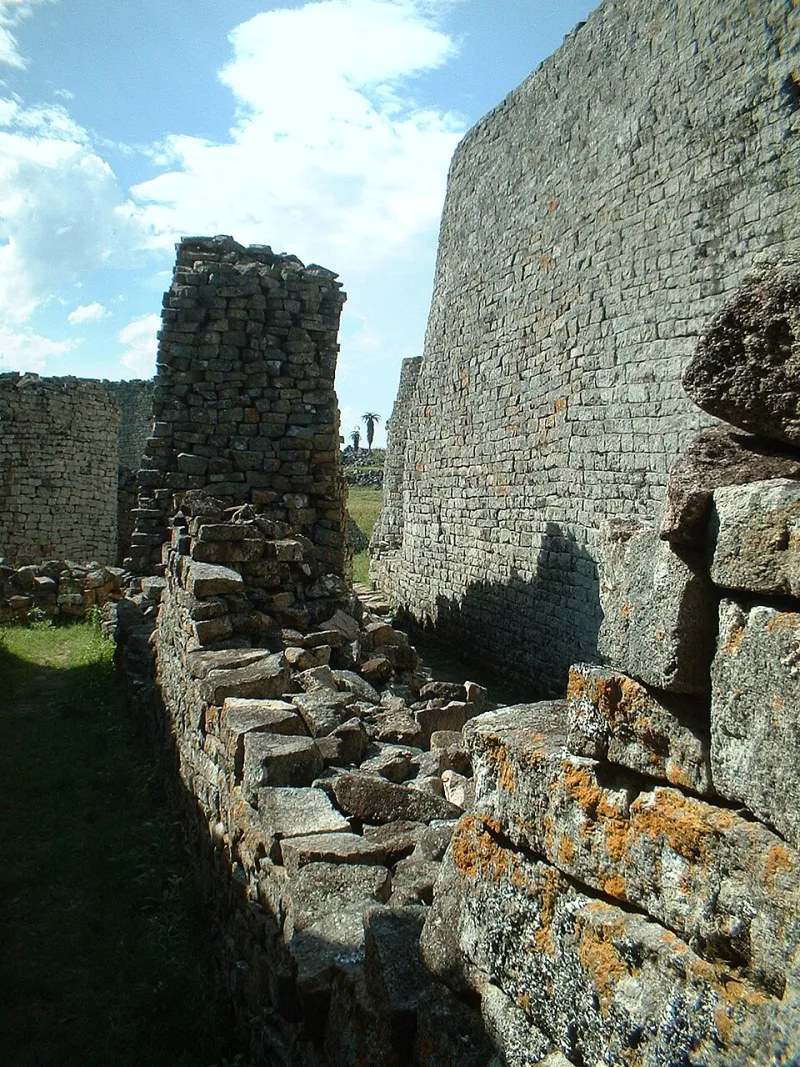
Photo: andryn2006, CC BY-SA 2.0, via Wikimedia Commons
When urban planners in Phoenix, Arizona convene emergency sessions about extreme heat mitigation, or when engineers in Houston scramble to redesign drainage infrastructure after yet another catastrophic flood, they are, in effect, solving problems that several African civilizations had already resolved centuries ago. The frameworks exist. The precedents are documented. What has been lacking, until recently, is the institutional willingness to look.
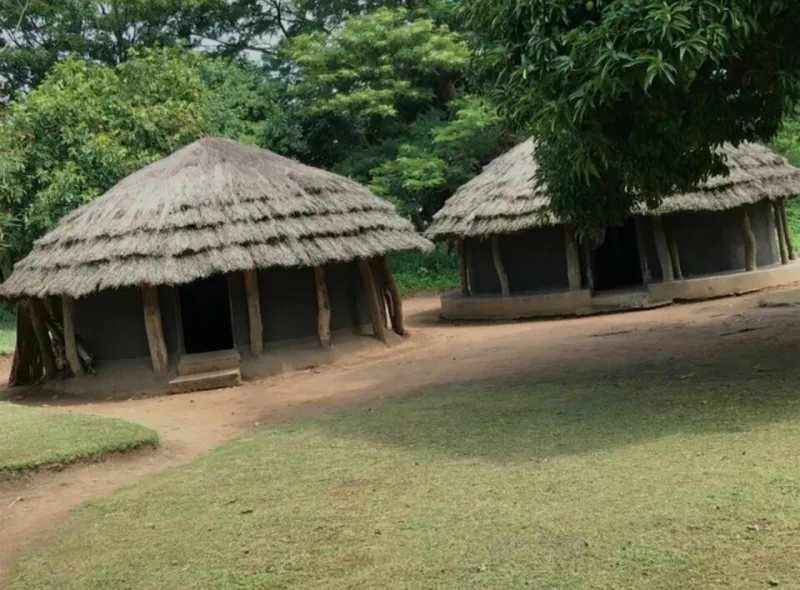
Across the African continent, from the stone-walled hilltop settlements of southern Africa to the labyrinthine medinas of the Sahel, urban traditions developed over millennia that addressed precisely the challenges now threatening American cities: thermal regulation without mechanical cooling, water management without industrial infrastructure, and the cultivation of social cohesion within dense, walkable neighborhoods. That these traditions were systematically dismissed during the colonial period — reframed as primitive, accidental, or simply invisible — is not merely a historical injustice. It is an ongoing practical catastrophe.
The Geometry of Community: Lessons from Great Zimbabwe
Great Zimbabwe, the thirteenth-century stone city that gave the modern nation its name, is most often discussed in terms of what it disproves — namely, the long-discredited colonial myth that Africans could not have constructed its massive granite enclosures. But archaeologists and urban theorists are now examining what the city's layout proves about the sophistication of its planners.
The settlement's concentric design — a great outer enclosure surrounding a central tower and inner sanctum, with residential areas radiating outward in a graduated hierarchy — was not merely ceremonial. Researchers at the University of Zimbabwe have argued that this arrangement created natural airflow corridors between stone walls, reducing interior temperatures during the region's brutal dry-season heat. The strategic placement of granaries within shaded interior courtyards, combined with the thermal mass properties of dry-stacked granite, produced a passive cooling system requiring no energy input whatsoever.
"What we are looking at is climate-responsive architecture at an urban scale," says Dr. Farai Muponda, an architectural historian who has consulted with city planners in Johannesburg and Nairobi. "The builders of Great Zimbabwe were not decorating a landscape. They were engineering a microclimate."
For American cities currently investing billions in reflective roofing programs and urban tree canopy initiatives, the underlying principle — using physical form to redirect heat and airflow — is identical. The African precedent simply achieved it without the billion-dollar price tag.
Timbuktu's Water Intelligence
Far to the northwest, the medieval city of Timbuktu presents a different but equally instructive case. Situated at the edge of the Sahara, where the Niger River's seasonal floods represented both a lifeline and a threat, Timbuktu's planners developed a water management philosophy that modern hydrologists have described as genuinely adaptive.
Rather than attempting to control or redirect floodwaters through rigid infrastructure — the approach that has repeatedly failed cities from New Orleans to Jakarta — Timbuktu's urban form was designed to coexist with seasonal inundation. Streets were elevated along predictable flood lines. Certain low-lying areas were left deliberately open, functioning as temporary retention basins during high-water seasons and as communal gathering spaces when dry. Buildings incorporated elevated foundations and permeable lower levels that absorbed and released moisture gradually.
This philosophy of working with hydrological cycles rather than against them is now a cornerstone of what Western planners call "sponge city" design — a concept that has gained enormous traction in cities like Chicago and Seattle as traditional hard-infrastructure flood control proves inadequate in the face of intensifying precipitation events.
Dr. Aminata Diallo, a civil engineer and urban planner based in Dakar who has presented her research at conferences from Cape Town to Chicago, frames the historical disconnect bluntly: "European colonizers looked at Timbuktu's relationship with water and saw chaos. They saw unpaved streets and flexible structures, and they interpreted that flexibility as poverty. What they were actually observing was a highly calibrated response to an unpredictable environment. We are spending enormous resources today to rediscover what our ancestors had already systematized."
The Street as Social Infrastructure
Beyond climate adaptation, African urban traditions offer equally compelling models for addressing what sociologists call the "social infrastructure crisis" afflicting many American cities — the erosion of shared public space and the weakening of community bonds that researchers link to rising rates of isolation, mental health decline, and civic disengagement.
The traditional compound layouts found across West and Central Africa — where individual family units cluster around shared courtyards, and those courtyards connect to progressively larger communal spaces — were not simply a product of limited resources. They encoded a deliberate theory of social organization, one in which privacy and community existed in calibrated relationship rather than opposition.
Contemporary African architects working in cities like Lagos, Accra, and Kigali are reviving these principles in explicitly modern contexts. Kigali's ongoing urban development program, widely cited in international planning literature, has incorporated traditional Rwandan neighborhood clustering concepts into new residential districts, prioritizing pedestrian connectivity, shared green space, and mixed-use density in ways that echo pre-colonial settlement patterns.
"The American suburb exported a particular vision of the good life — the detached house, the private lawn, the car as the primary mode of movement," observes Professor Kweku Asante, who teaches urban design at Howard University in Washington, D.C. "African urbanism, across enormous geographic and cultural diversity, tended toward a different vision: one where the quality of shared space was inseparable from the quality of individual life. That is not a nostalgic idea. It is an extraordinarily current one."
Recognition Without Appropriation
The growing interest among Western planners in African urban precedents is not without its complications. Critics within the African planning community have raised legitimate concerns about extractive scholarship — the pattern in which African knowledge systems are studied, published in Western journals, and incorporated into Western practice without meaningful attribution, compensation, or collaboration with the communities from which that knowledge originates.
Dr. Muponda is direct on this point: "There is a difference between learning from African urbanism and mining it. If a city in Texas adopts a passive cooling principle derived from Great Zimbabwe, that should involve African architects, African researchers, African firms. Not simply as consultants brought in at the end, but as genuine co-designers from the beginning."
This is not merely an ethical argument. It is, increasingly, a practical one. The nuances embedded in African urban traditions — the specific material choices, the relationship between built form and social practice, the ways in which a design principle must be adapted to a different climate or cultural context — are most accurately transmitted by practitioners who have spent careers working within those traditions.
A Different Origin Story for the Sustainable City
The narrative of sustainable urbanism in the United States tends to trace its intellectual lineage through European modernism, the American City Beautiful movement, and mid-twentieth-century environmental planning. That lineage is real. But it is radically incomplete.
The circular settlements, the flood-adaptive streets, the thermally intelligent stone walls, the courtyard compounds that knit private and public life together — these are not curiosities from a distant past. They are a living body of knowledge, actively being translated by African planners and architects into the design language of the twenty-first century.
For American cities confronting challenges that their existing frameworks have consistently failed to solve, the question is no longer whether African urban traditions have something to offer. The evidence is overwhelming that they do. The question, rather, is whether American institutions possess the intellectual humility to listen — and the structural commitment to ensure that listening becomes genuine collaboration rather than another chapter in a long history of uncredited borrowing.
The architecture was never invisible. We simply chose not to look.