Digging on Their Own Terms: How African Scholars Are Rewriting the Continent's Archaeological Record

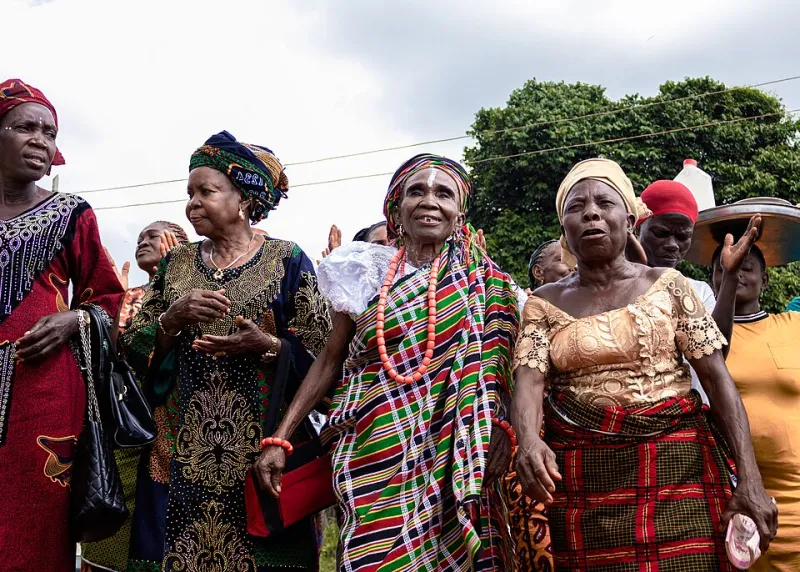
Photo: Chika Ezechi, CC0, via Wikimedia Commons
For much of the twentieth century, the story of Africa's ancient past was told largely by outsiders. European and American archaeologists arrived with their frameworks, their periodizations, and their assumptions — and they left with interpretations that frequently minimized the complexity of what they found. Today, a growing cohort of African scholars is demanding something different: the right to excavate, analyze, and narrate their own history on their own terms.
This is not simply an academic dispute. The stakes involve national identity, community dignity, and the integrity of the historical record itself. And in the Sahel — the vast semi-arid belt stretching from Senegal to Sudan — the confrontation between Western archaeological convention and indigenous historical knowledge is producing some of the most consequential scholarly debates of our time.
When the Elders Knew First
In the mid-2010s, a team of Malian archaeologists working near the ancient city of Djenné-Djenno encountered something that unsettled the prevailing timeline. Local griots — the hereditary custodians of oral history in West African societies — had long described a pattern of settlement in the region that predated the dates Western scholars had assigned to urban formation in sub-Saharan Africa. The griots were not speaking in metaphor. They were, as it turned out, speaking in fact.
Subsequent excavation, guided in part by the geographical and seasonal details embedded in those oral accounts, pushed confirmed settlement dates back further than previous digs had suggested. The discovery did not make international headlines. But among African archaeologists, it circulated as confirmation of something many had long argued: that indigenous knowledge systems carry empirical data, not just cultural sentiment.
Dr. Adama Kouyaté, a historian at the University of Bamako who has written extensively on oral tradition as archaeological methodology, puts it plainly. "The griot does not simply memorize stories," he has explained in public lectures. "He memorizes coordinates. He memorizes sequences. He memorizes cause and effect across centuries. When we learn to read that information scientifically, we find things that Western-trained archaeologists missed because they did not know where to look."
The Methodological Revolution
What distinguishes contemporary African archaeological scholarship is not a rejection of Western scientific tools — it is a refusal to treat those tools as the only legitimate means of knowing. Radiocarbon dating, ground-penetrating radar, and satellite imaging remain central to fieldwork across the continent. What has changed is the interpretive framework surrounding their use.
At the University of Nairobi, researchers in the Department of Archaeology have developed what they describe as a "dual-source methodology," in which oral historical accounts are systematically cross-referenced with physical evidence before any excavation plan is finalized. The approach is labor-intensive. It requires sustained community engagement, linguistic competency, and a willingness to treat community elders as co-investigators rather than informants. But its results have been striking.
A recent project examining Iron Age settlements in the Rift Valley region incorporated testimony from community historians whose families had occupied the land continuously for generations. Their accounts described specific agricultural terracing techniques and water management structures that, once excavated, proved to be far more sophisticated than the existing literature had acknowledged. The findings have since been cited in journals based in both Nairobi and London — a small but meaningful signal that the field is beginning to shift.
Confronting the Eurocentric Timeline
The broader intellectual challenge that African scholars are mounting concerns not just individual sites but the entire chronological architecture through which African civilizations have been categorized. Western archaeology has historically organized African history around a set of developmental stages borrowed from European historiography — stages that presuppose a particular trajectory of social and technological evolution. African scholars have increasingly argued that this framework distorts as much as it reveals.
Consider the long-standing debate over the origins of iron smelting. For decades, the dominant academic consensus held that iron technology diffused into sub-Saharan Africa from North Africa or the Near East. That consensus has been steadily dismantled by excavations at sites in present-day Cameroon, Nigeria, and Tanzania, where evidence of independent iron-working traditions has been dated to periods that complicate — and in some cases precede — the supposed diffusion timeline. African archaeologists were central to that dismantling, often working against institutional resistance from journals and funding bodies more comfortable with established narratives.
Dr. Sibongile Dlamini, a South African archaeologist currently affiliated with a research consortium studying precolonial southern African trade networks, describes the experience of publishing findings that contradict Western consensus as "a particular kind of professional friction." "You are asked to prove your data twice," she noted in a recent panel discussion hosted at Howard University in Washington, D.C. "Once for science, and once for the discomfort of people who built careers on a different story."
A Model for Collaborative Scholarship
For American audiences — particularly those engaged with questions of decolonization in education, museum curation, and public history — the methodological evolution underway in African archaeology offers a practical model worth studying. Institutions in the United States have increasingly grappled with how to incorporate indigenous knowledge into academic and cultural frameworks without reducing it to folklore or extracting it without credit. African scholars working in the Sahel and across the continent have been navigating precisely that challenge for decades, and their frameworks are transferable.
Several American universities have begun formal partnerships with African archaeological programs, embedding graduate students in field projects that practice dual-source methodology. The Smithsonian's National Museum of African Art has hosted symposia featuring Malian and Senegalese scholars who discuss how community-based historical knowledge has reshaped their understanding of material culture in their collections. These exchanges are still modest in scale. But they suggest a growing recognition that the expertise needed to interpret African heritage most accurately resides, in significant measure, in Africa.
The Archive That Walks and Speaks
There is a phrase used in several West African scholarly traditions to describe the griot's function: the living archive. It is a phrase that Western academics have sometimes found poetic but not quite rigorous — which is, of course, part of the problem. What African historians and archaeologists are demonstrating, site by site and finding by finding, is that the living archive is not a metaphor for something approximate. It is a description of something precise.
The memory keepers of the Sahel did not wait for carbon dating to know when their ancestors built, traded, and governed. They remembered. And now, as African scholars bring those memories into dialogue with the full range of scientific tools available, a more complete and more honest record of human achievement on the continent is finally coming into focus.
For those of us accustomed to treating the written document or the excavated artifact as the gold standard of historical evidence, that process is an invitation to reconsider what we mean by proof — and who we have trusted, for too long, to define it.