Encoded in Rhythm and Space: How Africa's Ancient Memory Systems Are Challenging Everything We Think We Know About the Brain
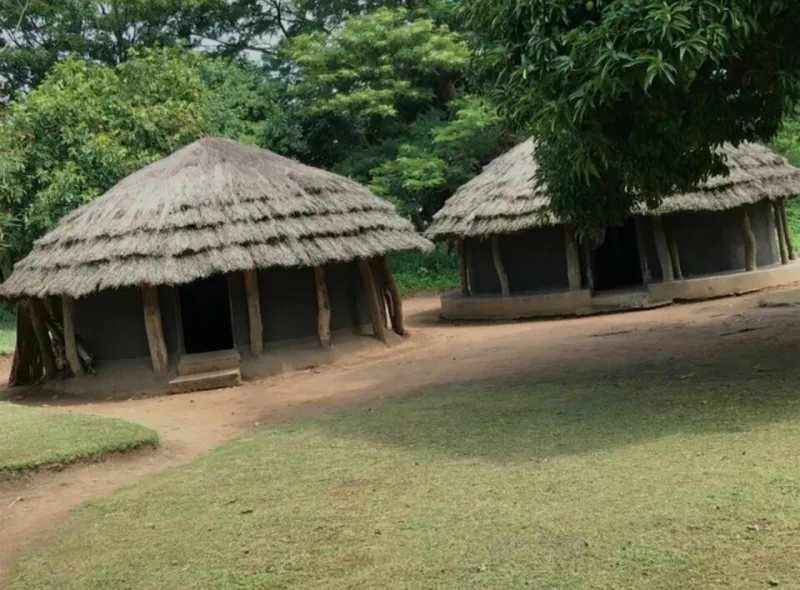
Photo: Asunta sura, CC BY-SA 4.0, via Wikimedia Commons
On any given morning in Nairobi, a young student named Amara sits at her desk in a Chicago apartment, eyes closed, mentally tracing a path across a sunlit savanna she has never physically walked. She is not daydreaming. She is studying for her MCAT. The landscape she moves through — populated by landmarks her Maasai grandmother taught her to place with almost architectural precision — is a memory palace, and it has helped her retain more biochemical pathways in six weeks than three semesters of conventional flashcard review ever managed.
"People look at me like I'm doing something unusual," she says with a quiet laugh. "But this is just how my family has always held knowledge."
What Amara practices intuitively, cognitive scientists are now scrambling to understand formally. Across disciplines ranging from neuroimaging to educational psychology, researchers are arriving at an uncomfortable conclusion: Africa's ancient mnemonic traditions — systems refined over millennia by griots, herders, healers, and navigators — represent some of the most neurologically sophisticated memory technologies ever developed by any human civilization.
The Architecture of Remembrance
The Western concept of the "memory palace" — technically known as the method of loci — is typically attributed to ancient Greece. Yet mounting archaeological and anthropological evidence suggests that spatially anchored memory systems were practiced across sub-Saharan Africa long before Simonides of Ceos reportedly discovered the technique after a banquet hall collapse in 477 BCE.
Dr. Nadia Osei, a cognitive anthropologist at Howard University who has spent two decades documenting indigenous knowledge systems across East and West Africa, argues that attributing spatial memory architecture exclusively to the classical Mediterranean world reflects a profound scholarly blind spot.
"When you study how Maasai elders encode grazing routes, seasonal water sources, and lineage histories," Dr. Osei explains, "you are looking at a fully realized spatial mnemonic system. The landscape itself becomes a structured cognitive map. Specific trees, rock formations, and even star positions serve as retrieval cues anchoring entire bodies of information. This is not metaphor. This is deliberate architecture."
She notes that these systems are not passive repositories. They are dynamic, regularly rehearsed through physical movement across the land, reinforcing what neuroscientists now call embodied cognition — the well-documented phenomenon in which physical sensation and spatial navigation dramatically enhance memory consolidation.
The Griot's Frequency
If the Maasai tradition exemplifies spatial memory, the griot tradition of West Africa illuminates an equally powerful but distinct mechanism: rhythmic encoding.
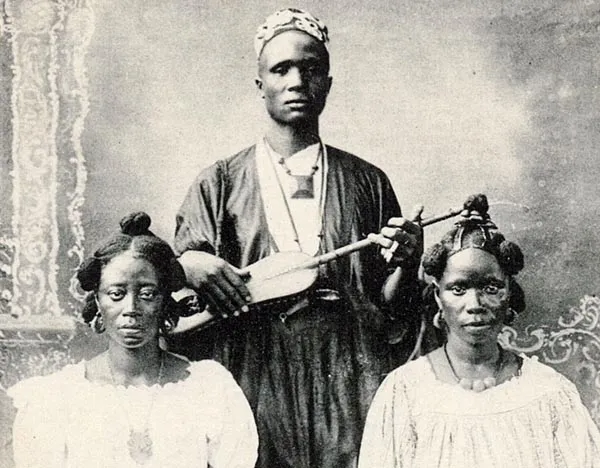
Griots — hereditary oral historians, musicians, and genealogists found across Senegal, Mali, Guinea, and beyond — have for centuries embedded complex historical, legal, and genealogical data within intricate rhythmic and melodic structures. These are not simply songs. They are, as Dr. Kofi Mensah, an ethnomusicologist at the University of Ghana who frequently lectures at American institutions, describes them, "multi-layered mnemonic algorithms."
"Each drum pattern, each tonal variation, carries semantic weight," Dr. Mensah explains. "A griot learning a royal lineage is not memorizing a list. He is encoding relational data into a rhythmic architecture that the brain processes through multiple sensory channels simultaneously. The redundancy is the point. If one channel fails, the others carry the signal forward."
Neuroscience has begun to validate this approach with striking precision. Research published over the past decade in journals including Neuron and Memory & Cognition confirms that information processed through concurrent auditory, rhythmic, and emotional channels produces significantly stronger and more durable memory traces than information processed through a single channel — the dominant mode of most American classroom instruction.
When Traditional Wisdom Meets the fMRI
Perhaps the most consequential recent development in this field is the growing collaboration between African knowledge custodians and Western neuroimaging laboratories. At Johns Hopkins University, a research team led by Dr. Patricia Wainwright has been conducting functional MRI studies on practitioners of traditional African mnemonic techniques alongside control groups trained exclusively in conventional Western study methods.
The preliminary findings, presented at the 2023 Society for Neuroscience annual meeting in Washington, D.C., are striking. Practitioners of spatial and rhythmic encoding techniques demonstrated significantly greater activation in the hippocampus, the entorhinal cortex, and the prefrontal cortex during memory retrieval tasks — precisely the neural circuitry associated with deep, durable long-term memory formation.
"What we are observing," Dr. Wainwright noted in her presentation, "is that these techniques are not simply cultural curiosities. They appear to engage the brain's memory architecture more completely and more efficiently than passive review methods, highlighting, or even many digital learning platforms."
For Dr. Osei, this validation, while gratifying, carries a note of irony. "These communities have been producing evidence of these techniques' effectiveness for thousands of years," she says. "The evidence was always there. It simply required Western institutional frameworks to recognize it as legitimate science."
Crossing the Atlantic: American Adoption
Across the United States, a quiet but growing movement is bringing these techniques into classrooms, medical schools, law firms, and corporate training programs.
At Spelman College in Atlanta, Professor Yaa Darko has incorporated griot-inspired rhythmic encoding exercises into her introductory neuroscience curriculum. Students compose short musical phrases embedding key anatomical terms and physiological processes, then perform them in small groups. Exam scores in her sections have consistently outperformed the college average by a margin she describes as "impossible to ignore."
"This is not about nostalgia for tradition," Professor Darko is careful to emphasize. "This is about identifying what actually works for the human brain. It happens that African cultures spent millennia engineering exactly that."
Beyond academic settings, corporate learning and development professionals are beginning to take notice. A New York-based consulting firm specializing in executive education recently piloted a workshop series drawing on Maasai spatial memory techniques, adapted for urban environments. Participants were guided to mentally map their home neighborhoods as mnemonic landscapes, anchoring presentation frameworks and client data to familiar physical locations.
Participant retention rates at the four-week follow-up assessment exceeded those of the firm's standard training programs by thirty-one percent.
Preserving the Source
For all the excitement surrounding these applications, scholars and practitioners are united in emphasizing a critical concern: the communities that developed and sustained these systems deserve recognition, compensation, and partnership — not extraction.
Dr. Mensah is direct on this point. "There is a long history of Western institutions taking from African knowledge traditions, repackaging them, and erasing the origin," he says. "If American universities and corporations are going to benefit from griot mnemonic techniques, they have an obligation to support the living communities that hold and transmit those techniques. That means funding, collaboration, and credit."
Kradjabeba has long held that uncovering Africa's stories is inseparable from the ethical responsibility to amplify African voices in the process. The memory systems explored here are not artifacts of a distant past. They are living technologies, actively maintained by communities who have much to teach — and who deserve far more than the role of passive inspiration for someone else's innovation.
Amara, for her part, is clear about where her gratitude belongs. "Every time I walk through that landscape in my mind," she says, "I am walking with my grandmother. That is not a technique. That is a relationship. The science just finally caught up to what she already knew."