Before Athens: The African Council Traditions That Quietly Rewrote the Rules of Self-Governance
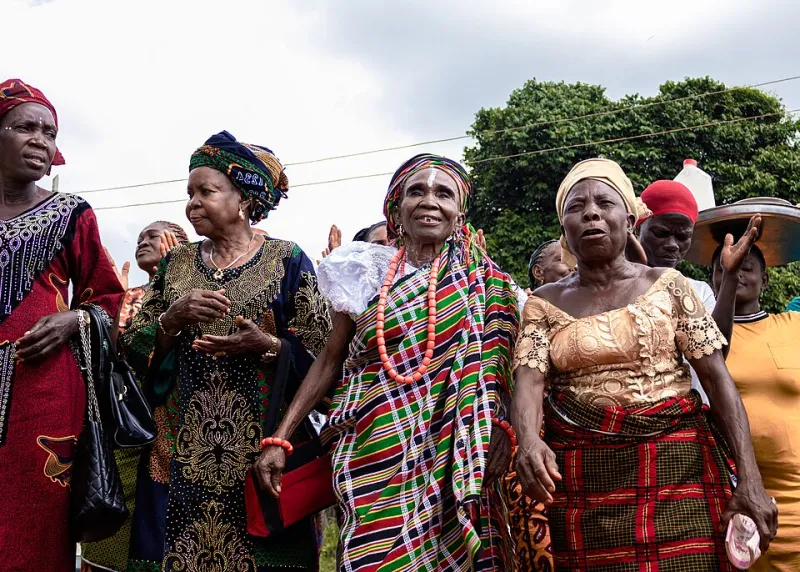
Photo: Danielcharle, CC BY-SA 4.0, via Wikimedia Commons
Every American student learns the same origin story of democracy: ancient Greece, white marble columns, Athenian citizens gathered in the agora. It is a narrative so deeply embedded in Western civic education that questioning it can feel almost heretical. Yet the historical record, when examined with genuine rigor, tells a far more complicated and more interesting story — one in which African governance traditions played a formative, if systematically overlooked, role in shaping the ideals that underpin modern democratic theory.
At Kradjabeba, we believe that recovering these stories is not merely an academic exercise. It is a prerequisite for honest self-understanding — especially in a country like the United States, where debates about representation, inclusion, and the legitimacy of governing institutions have never been more urgent.
The Hausa Emirate System and the Architecture of Accountability
The Hausa states of what is now northern Nigeria developed, over many centuries, a layered administrative structure that bears striking resemblance to principles Americans would recognize as federalism. Political authority was distributed across a hierarchy of councils — from village-level assemblies to emirate courts — each with defined responsibilities and, critically, defined limits. Rulers were not absolute sovereigns. They were expected to consult bodies of advisors drawn from distinct social and occupational groups, and their legitimacy depended substantially on maintaining that consultative relationship.
Scholars such as M.G. Smith, whose mid-twentieth-century ethnographic work on Hausa government remains a foundational text in political anthropology, documented how this system embedded checks on executive power long before Enlightenment philosophers were theorizing about the separation of powers. The parallels are not coincidental talking points — they are structural convergences that demand serious scholarly attention.
Igbo Stateless Democracy: A Radical Experiment in Horizontal Power
Perhaps even more striking is the governance tradition of the Igbo people of southeastern Nigeria. Unlike the Hausa emirates, many Igbo communities operated without centralized chiefs at all — a form of organization that Western political science, when it eventually encountered it, struggled to categorize. The answer was not chaos, but rather an intricate web of age-grade associations, title societies, and open assemblies called ọha na eze (the community and its deliberation).
Decisions affecting the community required broad consensus. Dissent was not merely tolerated; it was structurally built into the process. Any elder, and in some communities any adult member, could speak. The process was slow by design — because legitimacy, not efficiency, was the paramount value.
This model resonates powerfully with contemporary American debates about participatory budgeting, town hall governance, and the democratic deficit many citizens feel in representative systems. When urban planners and political theorists in cities like Minneapolis or Portland experiment with neighborhood-level deliberative councils, they are — whether they know it or not — reinventing a wheel that Igbo communities had already engineered.
The Maasai Laibons and the Ethics of Delegated Authority
The Maasai of East Africa offer yet another dimension of this story. Among the Maasai, the laibon — a spiritual and advisory leader — held considerable influence but no coercive authority. Governance was distributed among age-set councils (ilkiama), groups of men who had passed through shared initiation rites and therefore held collective responsibility for community decisions. Leadership was earned through demonstrated wisdom and social trust, not inherited through bloodlines alone.
This emphasis on earned legitimacy and collective responsibility maps onto principles that American democratic theory claims as its own. The Founders' suspicion of hereditary aristocracy, their insistence that authority must be derived from the consent of the governed — these were not ideas that sprang fully formed from Locke and Montesquieu. They emerged from a broader intellectual environment that, historians are increasingly documenting, was shaped by encounters with diverse governance traditions, including those from Africa.
The Constitutional Connection: More Than Metaphor
The influence of African governance on constitutional design is not merely analogical. Scholars including Cheikh Anta Diop and, more recently, Mahmood Mamdani have traced direct and indirect pathways through which African political philosophy entered European and American intellectual discourse — often through the writings of missionaries, explorers, and colonial administrators who, whatever their intentions, documented these systems in detail.
Benjamin Franklin's well-documented admiration for the Haudenosaunee Confederacy is widely cited in discussions of Indigenous influence on American constitutionalism. Less widely cited is the evidence that the Haudenosaunee's own confederate model had parallels — and possibly historical connections — to governance traditions across the African continent that shaped the broader Atlantic world through the movement of enslaved people who carried political knowledge as surely as they carried cultural memory.
That knowledge did not disappear on the Middle Passage. It persisted, adapted, and surfaced in the mutual aid societies, Black churches, and community assemblies that African Americans built under conditions of extreme repression — institutions that became, in turn, incubators of the Civil Rights Movement and its profoundly democratic vision.
Why This Matters Now
The United States is currently engaged in a painful national argument about who belongs in its democracy, whose voices count, and whether its institutions are capable of delivering genuine representation. These are not new questions, but they have acquired fresh urgency.
Recovering the African roots of democratic governance is not about replacing one origin myth with another. It is about expanding the frame — acknowledging that the impulse toward self-determination, toward accountability, toward collective deliberation, is not the proprietary invention of any single civilization. It is a human inheritance, and Africa's contributions to that inheritance are profound.
For American educators, policymakers, and citizens willing to look honestly at that wider history, the reward is not just intellectual enrichment. It is a richer toolkit for confronting the democratic challenges of the present — drawn from a tradition that has been quietly shaping our politics all along.