Threads That Speak: The Hidden Communication Codes of African Braiding Traditions
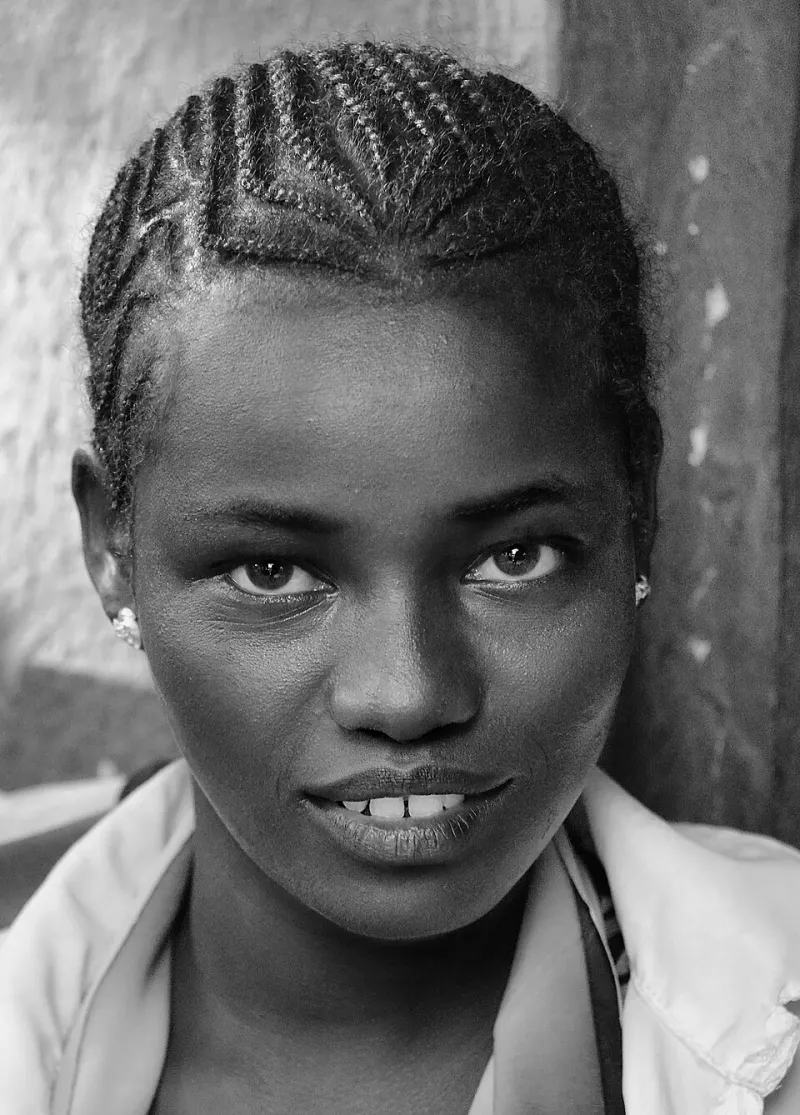
Photo: Rod Waddington, CC BY-SA 2.0, via Wikimedia Commons
Every braid is an argument against forgetting.
That is how one Atlanta-based cultural historian describes the practice she has spent two decades documenting: the use of African hairstyling as a medium of communication, memory, and identity — a system so sophisticated that scholars of semiotics, the study of signs and symbols, have taken serious academic interest in it.
A Language Worn on the Head
Across West and Central Africa, hairstyling functioned as a legible social text long before European contact. Among the Himba of Namibia, the style of one's braids announced age grade and social standing. Among the Yoruba and many other peoples, intricate cornrow patterns carried names, meanings, and affiliations — geometric arrangements that identified kinship, spiritual devotion, marital status, or membership in particular communities.
The braider was, in a real sense, a scribe. Hours spent at the braiding circle were hours of transmission: songs, stories, news, instruction. The style outlasted the session, walking through the village broadcasting what the wearer's community needed to know about them.
The Middle Passage and the Encoded Braid
The most powerful — and most carefully told — chapter of this history concerns enslavement. Oral tradition and documented accounts describe how braiding practices crossed the Atlantic inside the heads of enslaved African women, and how hair became a covert medium under conditions of total surveillance.
The most widely repeated tradition holds that braids were used to carry practical intelligence: seeds woven into hair for cultivation in the Americas, and — in accounts passed down through families and popularized by historians and artists — patterns that could encode paths, escape timing, or signals of readiness for flight. Historians debate the documentary record for specific claims, and honest scholars say so. What is beyond dispute is that enslaved people did use hair as a site of autonomy, identity, and covert community life — braiding each other's hair in quarters where every other institution of self-expression had been outlawed.
The rice seeds story has a firmer archival basis: researchers studying the Carolina rice economy have documented African women's roles in carrying agricultural knowledge, and the tradition of seeds concealed in hair is recorded in the oral histories of the Gullah Geechee communities and in the work of scholars like the art historian J. Harrell and the widely cited research of Lori L. Tharps, co-author of Hair Story: Untangling the Roots of Black Hair in America.
The Signal Continues
The braid-as-broadcast never stopped transmitting. In the twentieth century, the Afro became a political statement worn on the head. Cornrows carried the names of neighborhoods and the aesthetics of hip-hop's first decades. In the 1980s and 2010s alike, American workplaces, schools, and even the military attempted to regulate Black hair — attempts that produced, in response, the CROWN Act, now law in more than twenty states, banning discrimination based on hair texture and protective styles.
There is a precise historical irony there. Legislatures in statehouses across the country have spent recent years debating what braids mean — because braids have always meant something. The children sent home from school for their locs, the news anchors and athletes and soldiers negotiating what their hair is permitted to say: all are participants in a communication system far older than the republic they live in.
Reading the Code Forward
For American audiences raised on the idea that information lives in devices, the braiding tradition offers a different proposition: information lives in people, in relationships, in the patient labor of one person's hands in another's hair. Every braiding session remains what it was in the villages of West Africa — a network node, a news exchange, an act of transmission between generations.
The style walks out the door and speaks. It always has. The only question is whether the rest of us have learned to listen.