Built from the Earth Up: How African Architectural Wisdom Is Answering America's Affordable Housing Crisis
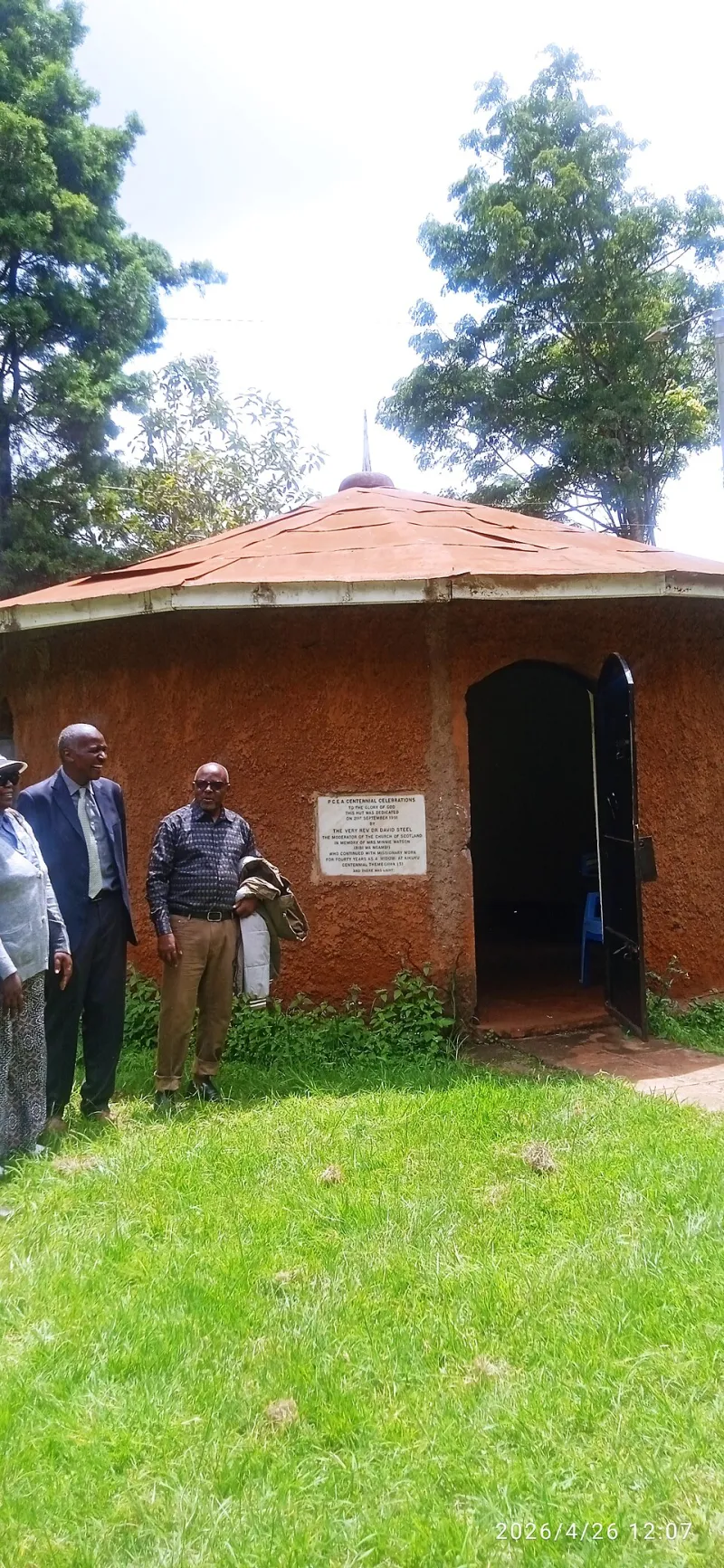
Photo: Re-sendings, CC BY-SA 4.0, via Wikimedia Commons
In Houston, Phoenix, and Baltimore, the conversation about affordable housing has grown increasingly urgent. Rents have outpaced wages for decades. Climate extremes are rendering poorly insulated apartment blocks nearly uninhabitable during summer heat waves. And the dominant model of residential development — concrete, steel, centralized utility infrastructure — has proven both expensive and ecologically costly. Into this impasse, a quiet but consequential architectural movement is introducing a radically different set of blueprints: ones drawn not from modernist theory, but from centuries of African spatial intelligence.
Fractals Before Le Corbusier
When mathematician Ron Eglash traveled across Africa in the 1980s studying indigenous settlement patterns, he documented something that mainstream architectural theory had largely ignored: African villages were not arranged haphazardly. They were fractal. The Mangriebe communities of northern Cameroon, for instance, organize their compounds using self-similar geometric patterns — smaller structures echo the form of larger ones, and those echo the layout of the village as a whole. The same recursive logic appears in the Ba-ila settlements of Zambia, the Nankani compounds of Ghana, and the circular kraals of southern Africa.
This was not aesthetic preference. It was functional engineering. Fractal layouts maximize the ratio of shared boundary to enclosed space, which in practical terms means more efficient airflow, natural shade distribution, and social oversight — neighbors can monitor common areas from multiple vantage points without surveillance infrastructure. In dense American urban contexts where land is expensive and community safety is a persistent concern, these principles translate with striking relevance.
Architects like Modjé Labossière, who works across both Francophone West Africa and North America, have begun formally incorporating fractal compound logic into low-income housing proposals in cities like Detroit and New Orleans. "The Western model assumes that density means vertical stacking," Labossière has noted in design forums. "But African compound architecture demonstrates that density can be horizontal, communal, and deeply livable without sacrificing privacy or resilience."
The Climate Intelligence of Mud Brick
Few materials have been more consistently underestimated by Western builders than earthen construction. Yet the mud-brick architecture of Mali's Saharan and Sahelian zones — most famously represented by the Great Mosque of Djenné — has regulated interior temperatures without mechanical cooling for centuries. The thermal mass of compressed earth absorbs daytime heat and releases it slowly overnight, maintaining interior temperatures that can be fifteen to twenty degrees cooler than the outside air during peak summer months.
This is not primitive improvisation. It reflects a sophisticated material science developed through generations of iterative refinement, adapted precisely to the demands of extreme heat. In American cities like Phoenix or Las Vegas, where summer temperatures now routinely exceed 110 degrees Fahrenheit and air conditioning accounts for a disproportionate share of household energy costs, the logic of thermal mass construction is economically compelling.
Organizations such as the African Architecture Research Network have partnered with universities including the University of New Mexico and Howard University to test modernized earthen construction techniques in American climates. Early pilot projects in Albuquerque have demonstrated that rammed-earth walls built using locally sourced soil can reduce cooling energy demands by up to forty percent compared to standard wood-frame construction — a significant finding at a moment when energy costs are a primary driver of housing unaffordability.
Community as Infrastructure
Perhaps the most radical departure that African architectural traditions offer is not material or geometric, but social. Many West and Central African building traditions do not treat the individual household as the primary unit of design. Instead, they organize space around the compound — a cluster of related households sharing courtyards, cooking areas, and in some traditions, granaries and water sources. The compound is not merely a collection of buildings; it is a formalized expression of interdependence.
This model challenges one of the foundational assumptions of American residential development: that housing is a private commodity purchased and maintained by individual households. The compound model distributes maintenance responsibilities, reduces redundant infrastructure, and creates natural networks of mutual support that function as a form of social insurance.
Urban planners in cities like Minneapolis and Atlanta have begun experimenting with what they call "cluster housing" or "co-housing" models that echo these principles, though often without acknowledging their African antecedents. Kradjabeba's ongoing coverage of African heritage and its global resonance compels us to name that lineage explicitly. When a housing cooperative in East Atlanta organizes shared garden space and communal laundry facilities around a central courtyard, it is reinventing — however unconsciously — a spatial philosophy that African communities codified long before the first American city was platted.
Reverse-Engineering Ancient Knowledge
The challenge facing architects who wish to draw on these traditions responsibly is considerable. African building knowledge was not always recorded in forms that translate easily into permit applications or building codes. Much of it was transmitted through apprenticeship, oral instruction, and lived practice — embedded in the hands and eyes of master builders rather than in architectural drawings. This is precisely the kind of knowledge that colonial disruption eroded, and that contemporary African scholars are working urgently to recover and document.
Institutions like the African Heritage Foundation and the Aga Khan Trust for Culture have invested substantially in this documentation work, interviewing elder builders, conducting structural analyses of surviving traditional buildings, and developing training curricula that can transmit these methods to new generations. In the United States, diaspora architects and scholars are beginning to serve as critical bridges between that recovered knowledge and American design practice.
For Black American communities in particular, this reconnection carries significance that extends beyond the pragmatic. Architectural traditions that were systematically devalued during centuries of colonialism and enslavement are being recognized as sources of genuine innovation — not as curiosities, but as competitive intellectual contributions to one of the most pressing challenges of the twenty-first century.
A Different Kind of Blueprint
The American housing crisis is, at its core, a crisis of imagination as much as a crisis of resources. The dominant development model has proven inadequate not because better alternatives don't exist, but because those alternatives have been systematically excluded from the conversation. African architectural traditions — diverse, climate-adapted, socially intelligent, and materially innovative — represent exactly the kind of overlooked knowledge that a more honest and expansive design culture needs.
As cities from Baltimore to Los Angeles search for ways to build more housing at lower cost with smaller environmental footprints, the geometry of harmony encoded in African villages is not a romantic detour from serious solutions. It may be the most serious solution on the table.