Landscapes as Libraries: How Ancient African Spatial Memory Systems Are Rewriting Cognitive Science
Photo: Oxfam East Africa, CC BY 2.0, via Wikimedia Commons
In introductory psychology textbooks across the United States, the story of the memory palace typically begins with Simonides of Ceos, the ancient Greek poet who, legend holds, identified bodies at a collapsed banquet hall by mentally retracing where each guest had been seated. From that story, Western cognitive science built an entire tradition: the method of loci, a mnemonic technique in which the practitioner mentally walks through a familiar space to retrieve stored information. For centuries, this framework has been presented as one of humanity's great intellectual discoveries.
But a growing body of scholarship is complicating that origin story in ways that carry profound implications — not just for historians, but for neuroscientists, educators, and clinicians working on memory disorders today.
Researchers are documenting, with increasing rigor, that sophisticated spatial memory traditions existed across African societies for millennia before Simonides was born. And far from being primitive precursors to Greek technique, these systems exhibit a structural complexity that modern cognitive science is only beginning to fully appreciate.
Knowledge Embedded in the Land
The principle at the heart of African spatial memory traditions is deceptively straightforward: the landscape itself is a text. Physical environments — the orientation of a homestead, the sequence of trees along a ceremonial path, the arrangement of stones at a ritual site — were deliberately structured to carry and transmit knowledge across generations.
Among the Luba people of what is now the Democratic Republic of Congo, memory boards known as lukasa served as three-dimensional mnemonic devices, their surfaces embedded with beads and shells arranged in patterns that trained specialists, called bana balute, could read to recall dynastic histories, migration routes, and cosmological teachings. The boards functioned not as passive records but as active spatial environments that the reader mentally inhabited during recitation.
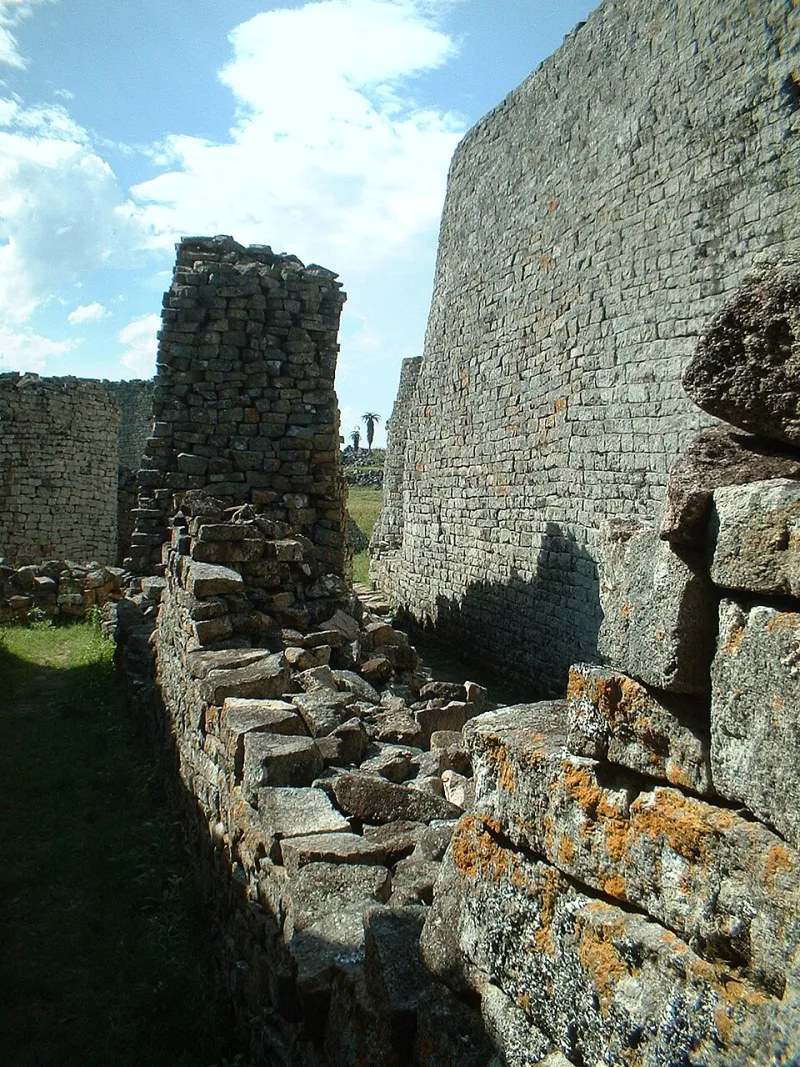
Similarly, scholars studying the built environments of Great Zimbabwe have noted that the site's stone enclosures and passage systems appear to have been designed, at least in part, as navigational memory aids — physical sequences through which ritual knowledge was stored and retrieved by those initiated into their meaning. The architecture was not merely symbolic. It was functional cognitive infrastructure.
Across the Sahel, griots and oral historians embedded genealogical and historical knowledge into the spatial organization of villages, the positioning of sacred groves, and the choreography of communal ceremonies. The route of a procession was also a mnemonic sequence. The geography of a settlement was also a historical argument.
What Neuroscience Is Now Confirming
The reason these findings are landing with such force in contemporary cognitive science has everything to do with what neuroscience has learned about the hippocampus over the past three decades.
The 2014 Nobel Prize in Physiology or Medicine was awarded to John O'Keefe, May-Britt Moser, and Edvard Moser for their discovery of place cells and grid cells — neurons in the hippocampus and entorhinal cortex that form the brain's internal GPS system. Critically, researchers have since established that this same neural architecture underlies not only physical navigation but the organization of episodic memory and abstract knowledge. The brain, it turns out, stores information spatially by default.
This finding has electrified the field. It means that memory systems which encode knowledge into physical and spatial frameworks are not working against the brain's architecture — they are working precisely with it. And it means that African traditions that embedded knowledge in landscapes, architectural sequences, and embodied ceremonial routes were, in effect, operating with an intuitive understanding of hippocampal function that Western cognitive science arrived at only recently.
Dr. Eleanor Maguire's landmark studies at University College London on London taxi drivers demonstrated that intensive spatial navigation practice produces measurable changes in hippocampal structure. Researchers studying analogous traditions in African contexts are beginning to ask whether generations of spatially encoded oral transmission produced similar neurological adaptations — and what those findings might mean for how we teach and treat memory today.
The Deliberate Erasure — and Its Costs
The oversight here was not accidental. Colonial-era anthropology consistently categorized African knowledge systems as folklore rather than epistemology, as cultural artifact rather than cognitive technology. The intellectual frameworks being imported from Europe were assumed to be universal; the frameworks already operating across Africa were assumed to be local, and lesser.
The practical consequences of this dismissal have been significant. For decades, clinical approaches to memory rehabilitation in conditions like Alzheimer's disease and traumatic brain injury have drawn almost exclusively from Western mnemonic traditions. The method of loci has been applied in therapeutic settings with meaningful but limited results. Researchers are now beginning to ask whether spatially embedded, community-anchored, and movement-integrated memory practices — approaches that African traditions developed with considerable sophistication — might offer complementary or superior therapeutic pathways.
Preliminary work in this area is genuinely promising. Studies incorporating embodied spatial navigation into memory training for older adults have shown stronger retention outcomes than sedentary visualization techniques alone. The integration of physical movement, environmental cues, and social context — all hallmarks of African spatial memory traditions — appears to engage the hippocampal system more robustly than the solitary mental walk through an imagined Roman villa.
Reclaiming the Curriculum
The implications for education in the United States are equally significant. American schools have grappled for years with learning gaps, declining memory retention in the age of digital distraction, and the chronic underperformance of students who do not thrive in text-centric instructional models. Spatially and kinesthetically embedded learning — learning that moves through environments, that encodes knowledge in physical sequences, that integrates community and place — has deep roots in African pedagogical traditions and growing empirical support in cognitive research.
Educators in several U.S. districts have begun piloting place-based and spatially anchored curricula inspired in part by Indigenous and African knowledge traditions. The early results are encouraging, particularly for students who have historically been underserved by conventional classroom formats.
Schools and universities that take these traditions seriously are not simply diversifying their syllabi. They are accessing a richer and more scientifically grounded understanding of how human memory actually works.
A Fuller Story of Human Intelligence
The memory palace did not begin with Simonides. That is, at this point, not a radical claim — it is an empirical one, supported by archaeological evidence, ethnographic documentation, and an expanding body of neuroscientific research. The spatial encoding of knowledge is among the oldest and most sophisticated cognitive technologies our species ever developed, and some of its most refined expressions emerged on the African continent.
For Kradjabeba, this story matters precisely because it is not only a historical correction. It is a living resource. The scholars, educators, and clinicians working at the intersection of African heritage and cognitive science are not engaged in archaeology for its own sake. They are recovering tools — elegant, effective, neurologically grounded tools — that the world urgently needs.
The landscape was always a library. We are only now learning to read it again.