Stronger Than Steel: What African Kinship Networks Teach Us About Building Societies That Actually Hold Together
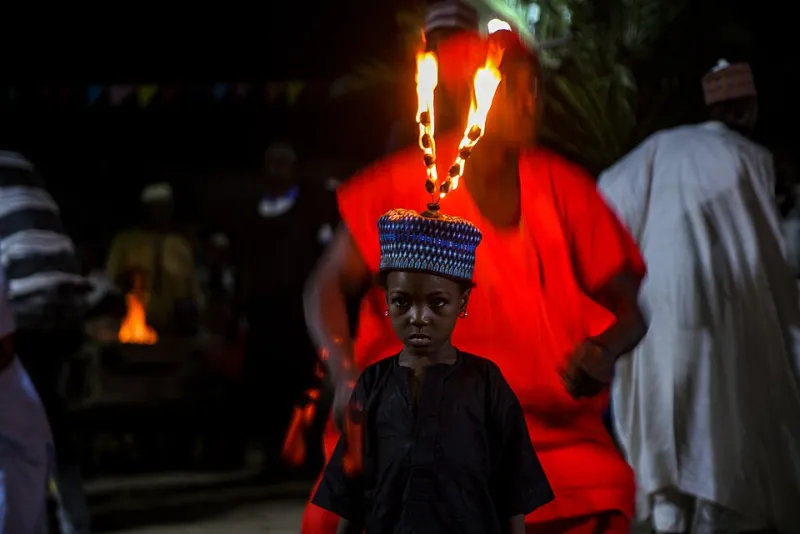
Photo: SMMIMAGES, CC BY-SA 4.0, via Wikimedia Commons
In 2022, a team of sociologists at the University of Michigan published a quietly remarkable finding: in communities across sub-Saharan Africa, households embedded within dense kinship networks were significantly more likely to weather economic catastrophe without descending into extreme poverty than households of comparable income that lacked such ties. The study drew relatively little mainstream attention. Yet its implications—for how the United States designs its own social policy, and for how Americans understand resilience itself—deserve serious consideration.
The systems under examination are not new. They are, in many respects, among the oldest functional social technologies on earth.
The Architecture of Mutual Obligation
Across much of Africa, the extended family unit—encompassing grandparents, aunts, uncles, cousins, and in-laws across multiple generations—has historically operated as something closer to a cooperative institution than a loose biological association. Anthropologists use the term ubuntu to describe the philosophical underpinning common to many southern and central African communities: a worldview in which individual wellbeing is understood as inseparable from collective flourishing. The Zulu phrase umuntu ngumuntu ngabantu—a person is a person through other persons—is perhaps its most cited articulation.
But ubuntu is not merely a philosophical abstraction. It is encoded in concrete social arrangements: rotating credit associations known as tontines or susus across West Africa, communal childcare obligations distributed across female kin networks in East Africa, and elaborate elder care protocols in which the oldest members of a lineage are housed, fed, and attended to as a shared familial responsibility rather than outsourced to institutional facilities.
Dr. Akosua Perbi, a social historian at the University of Ghana, has described these systems as "infrastructure that is invisible to economists because it does not appear on a balance sheet." That invisibility, she argues, has caused Western development models to systematically undervalue—and sometimes actively disrupt—the very mechanisms that have kept communities solvent for generations.
Where Institutions Fall Short
The contrast with American social support structures is instructive. The United States spends an extraordinary sum on formal welfare infrastructure—Medicaid, Social Security, the Supplemental Nutrition Assistance Program, and a sprawling network of nonprofit service providers—yet outcomes in critical areas remain deeply troubling. Approximately 37 million Americans live in poverty. More than 11 million adults over the age of 65 report chronic loneliness. The nursing home industry, which houses roughly 1.3 million elderly Americans, has faced persistent scrutiny over quality of care, staffing shortages, and the profound psychological costs of institutional isolation.
These are not simply failures of funding. They are, at least in part, failures of design—the consequence of building support systems around transactions and eligibility criteria rather than around relationships and reciprocal obligation.
"What African kinship systems do extraordinarily well is distribute risk," explains Dr. Mwangi Kamau, a development economist at Howard University whose research focuses on informal social protection in Kenya and the Kenyan diaspora in the United States. "When one member of an extended network faces a crisis—a medical emergency, a job loss, a drought—the burden does not fall on a single household or a single government program. It is absorbed across dozens of relationships that already exist and already carry a shared stake in each other's survival."
Case Studies in Communal Resilience
The evidence for this distributed resilience is not merely theoretical. In Ethiopia, researchers studying the edir—a traditional mutual aid association found in both urban and rural communities—have documented how these groups have provided funeral support, emergency loans, and medical assistance to members across economic downturns that would have overwhelmed any comparable institutional system. A 2019 study published in World Development found that edir membership was one of the strongest predictors of household recovery following health-related financial shocks.
In Nigeria, the esusu rotating savings and credit associations have allowed millions of individuals—particularly women—to access capital without formal banking relationships, financing small businesses, school fees, and home improvements in communities where institutional lenders either do not operate or impose prohibitive terms.
Perhaps most striking to American observers is the elder care dimension. Across much of the continent, placing an aging parent in an institutional care facility carries a social stigma so profound as to be functionally prohibitive. The expectation that elderly family members will be absorbed into the household of an adult child—or rotated among several children—is not experienced primarily as a burden. Research conducted by the African Population and Health Research Center in Nairobi has found that elderly individuals living within multigenerational family arrangements report substantially higher levels of psychological wellbeing and physical health than those living alone or in institutional settings.
What American Policymakers Are Beginning to Notice
The United States is not without its own traditions of communal mutual aid—the fraternal organizations of the nineteenth century, the Black church networks that sustained African American communities through segregation, the immigrant rotating credit associations that persist in communities from Chinatown to Little Ethiopia in Washington, D.C. But these traditions have been progressively marginalized by a welfare architecture that, beginning in the mid-twentieth century, increasingly routed support through bureaucratic institutions rather than community relationships.
A growing cohort of progressive policy researchers is now arguing that this shift was a mistake—or at least an incomplete solution. Dr. Darrick Hamilton of The New School, whose work on community wealth-building has gained traction in policy circles, has pointed to African mutual aid traditions as models for reimagining how social protection might be structured in a country that clearly cannot rely on government programs alone.
Some municipalities have begun quietly experimenting. Certain guaranteed income pilots—including those in Stockton, California, and Atlanta, Georgia—have been designed with explicit attention to how cash transfers interact with existing informal support networks rather than treating recipients as isolated individuals. Early findings suggest that households embedded in strong community networks use unconditional cash more effectively, in part because they can pool resources and share risk in ways that isolated households cannot.
The Deeper Lesson
What African kinship systems ultimately offer is not a blueprint for direct replication—the specific cultural, historical, and demographic contexts that shaped the edir in Addis Ababa or the tontine in Dakar cannot simply be transplanted to Cleveland or rural Appalachia. What they offer, rather, is a proof of concept: evidence that societies can be organized around relational obligation rather than transactional exchange, and that such organization produces measurably better outcomes across a range of human needs.
For a country in which deaths of despair are rising, nursing homes are understaffed, and millions of elderly Americans report having no one to call in a crisis, that proof of concept is not an abstraction. It is an invitation to ask harder questions about what infrastructure actually means—and who, in the end, it is built to serve.
Africa's kinship systems did not survive for millennia by accident. They survived because they worked. The task now is to understand precisely why, and to have the intellectual honesty to let that understanding reshape what we build next.