Circles of Trust, Walls of Debt: What African Rotating Credit Traditions Reveal About America's Student Loan Catastrophe
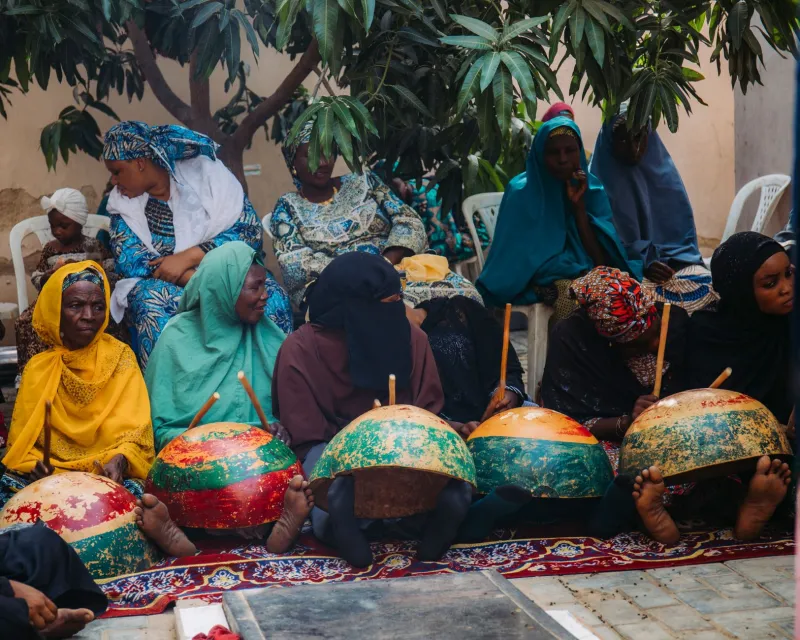
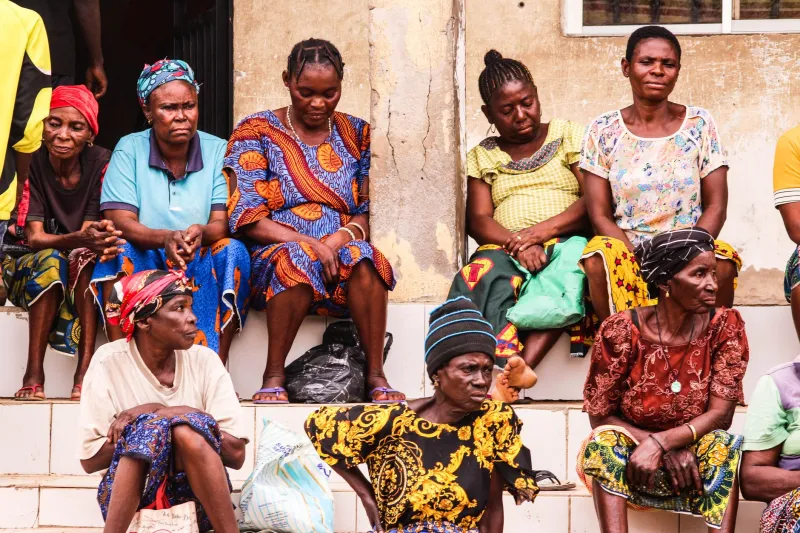
Somewhere in a community center in Atlanta, a group of Ghanaian-American women meets on the first Saturday of every month. Each member contributes a fixed sum into a shared pool. Each month, one member receives the full pot. No credit score is required. No interest accrues. No fine print governs the arrangement — only the binding currency of mutual trust and collective accountability. This practice, known in various West African traditions as esusu, susu, tontine, or chit fund, is ancient. It is also, by virtually every measure of financial health, more humane than the system currently suffocating an entire generation of American college graduates.
The United States student loan market now carries a debt load exceeding $1.7 trillion — a figure that has more than tripled over the past two decades. It is a crisis that disproportionately burdens Black and brown borrowers, first-generation college students, and those who pursued degrees at institutions that promised mobility and delivered precarity. To understand how this catastrophe was constructed, and how it might be dismantled, it is worth studying a financial architecture that operates on entirely different moral premises.
The Mechanics of Mutual Obligation
Rotating savings and credit associations — broadly categorized under the academic term ROSCAs — are among the most widely documented financial institutions in the world. Variants exist across West Africa, East Africa, the Caribbean, South Asia, and Latin America, each adapted to local language and custom. In the Yoruba tradition of Nigeria, the esusu has been traced back centuries. Among Igbo communities, the isusu functions along similar lines. Across the African diaspora in the United States, these circles traveled with enslaved and migrant communities and quietly sustained households that formal banking institutions refused to serve.
The operating logic is straightforward: a fixed group of participants agrees on a contribution amount and a rotation schedule. Each cycle, one member receives the lump sum — called the "pot" or "hand" depending on regional parlance. The group continues until every member has received once. There is no interest. There is no intermediary extracting a margin. The system's enforcement mechanism is social rather than legal: participants contribute faithfully because their reputation, their relationships, and their standing within a trusted community depend on it.
Dr. Tanisha Browne, a financial anthropologist whose research focuses on African diasporic economic practices, describes the ROSCA model as "a technology of solidarity." In her view, the genius of these arrangements lies not merely in their mechanics but in what they assume about human beings. "Western consumer finance begins from a premise of suspicion," she explains. "It assumes the borrower is a risk to be priced. African rotating credit begins from a premise of relationship. It assumes the participant is a neighbor to be trusted."
The Architecture of American Student Debt
The American student loan system begins from no such premise. Federal and private lenders extend credit to eighteen-year-olds — individuals with no credit history, no income, and no meaningful capacity to evaluate thirty-year financial obligations — at interest rates that compound annually and survive bankruptcy proceedings. The system was restructured significantly in the 1990s and again in the early 2000s, with each legislative revision tilting further toward institutional creditors and away from borrowers.
The consequences are now well-documented. The average borrower carries roughly $37,000 in student loan debt upon graduation. For Black graduates, that figure is substantially higher — studies from the National Center for Education Statistics consistently show that Black borrowers are more likely to borrow, borrow more, and struggle longer to repay than their white counterparts, even when controlling for income and degree type. The interest structures embedded in federal loan programs mean that a borrower who makes consistent payments for a decade may still owe more than they originally borrowed. This is not an accident. It is a design.
What makes this design particularly corrosive, when viewed against the ROSCA model, is its opacity. Borrowers are rarely equipped to calculate the true cost of their loans at the point of signing. Income-driven repayment plans, loan servicer transfers, forbearance periods, and capitalized interest create a labyrinth that even financially literate graduates struggle to navigate. The rotating credit circle, by contrast, operates in full transparency: every participant knows exactly what they have contributed, what they will receive, and when.
What Policymakers Are Missing
The contrast between these two models is instructive not merely as a moral indictment but as a policy blueprint. Financial reformers who have studied African credit traditions argue that several core principles could be translated — carefully and without romanticization — into structural reforms of American higher education finance.
First, the principle of transparent obligation. Loan agreements that required lenders to present borrowers with a plain-language, worst-case repayment scenario — including total interest paid over the life of the loan — would function analogously to the ROSCA's inherent visibility. Borrowers would enter the arrangement with genuine informed consent.
Second, the principle of community stake. In a rotating credit circle, every member has a direct financial interest in every other member's success. The current student loan system creates no such alignment: servicers profit from extended repayment, and investors in securitized student loan products benefit from default fees. Reformers have proposed income-share agreements structured around cohort accountability — models that bear more than passing resemblance to the communal logic of the esusu.
Third, and perhaps most radically, the principle of non-extraction. The ROSCA generates no profit for any party outside the circle. It is a tool for redistribution within a community, not accumulation by an institution. This principle challenges the foundational assumption of American higher education finance — that student borrowing should be a profitable enterprise — in ways that the current bipartisan reform debate rarely confronts directly.
James Osei-Mensah, a policy analyst at a Washington, D.C.-based economic justice organization who grew up watching his mother participate in a Ghanaian susu group in the Bronx, puts it plainly: "My mother's susu never asked her what her credit score was. It asked her whether she showed up. Whether she was accountable to her community. That is a different kind of creditworthiness, and it is one that the American financial system has never been willing to recognize."
Recovering a Different Imagination
The student debt crisis is, at its core, a crisis of imagination — a failure to conceive of education financing as anything other than a market transaction between an individual borrower and an institutional lender. African rotating credit traditions offer not a nostalgic alternative but an empirical proof of concept: systems built on collective trust, transparent obligation, and community accountability can and do function. They have functioned for centuries, often in precisely the economic margins that formal institutions abandoned.
This does not mean that a national student loan policy can or should replicate the intimate social dynamics of a ten-person susu circle. Scale introduces complexity. But the underlying architecture — the insistence that credit is a social relationship rather than a commodity, that obligation should be visible rather than obscured, that the purpose of lending is to build community stability rather than extract institutional profit — these are not naive ideals. They are operational principles with a long and documented track record.
America's student debt crisis will not be resolved by modest interest rate adjustments or incremental forgiveness programs alone. It will require a willingness to ask, with genuine intellectual honesty, what a credit system designed for human flourishing rather than institutional gain might actually look like. African communities have been answering that question for generations. The more pressing question is whether American policymakers are finally prepared to listen.