Pooling Trust, Building Wealth: What West African Tontines Reveal About the Failures of American Consumer Finance
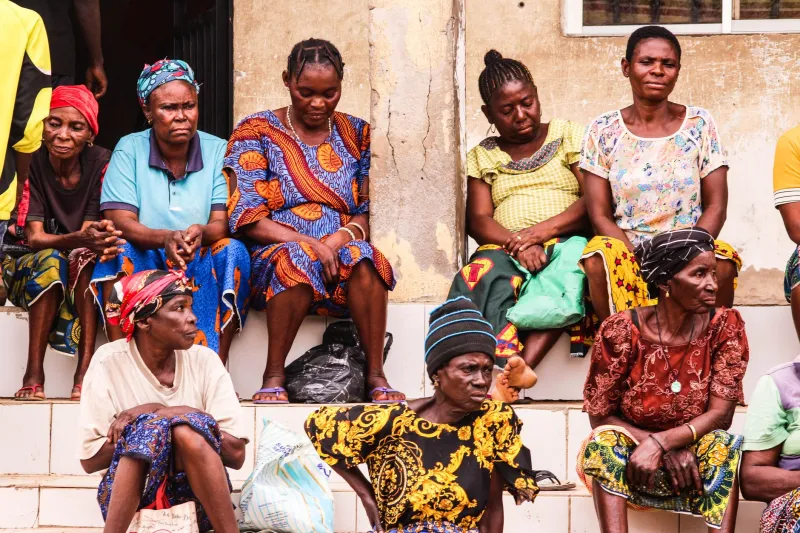
Somewhere in a modest apartment in the Bronx, a group of Senegalese women gather on the first Saturday of every month. They bring envelopes. They share a meal. They keep a ledger. Before the afternoon ends, one member walks away with a lump sum — perhaps $2,000, perhaps $5,000 — earned not through a loan application, a credit inquiry, or a conversation with a bank officer, but through the sustained, mutual commitment of her community. This is the tontine, and it has been operating quietly across African diaspora households in the United States for generations.
The term itself derives from a seventeenth-century European financial instrument, but the practice it now describes in West and Central Africa is far older and far more sophisticated than the name implies. Known as susu in Ghana and parts of the Caribbean, njangi in Cameroon, djanggui in Senegal, and esusu among the Yoruba of Nigeria, rotating savings and credit associations — RSCAs — represent one of the most durable financial architectures in human history. They predate the modern banking system by centuries. They have survived colonization, structural adjustment programs, and the relentless expansion of Western financial infrastructure. And in the United States today, they are thriving in communities that mainstream finance has systematically failed.
How the System Actually Works
The mechanics of a tontine are elegantly simple. A defined group of participants — typically between eight and thirty people — agrees to contribute a fixed sum of money at regular intervals, whether weekly, biweekly, or monthly. The total pool collected each cycle is then disbursed in full to a single member. The rotation continues until every participant has received the pot once. No interest accrues. No fees are extracted. No collateral is required.
What makes the system work is not a legal contract but a social one. Membership is typically restricted to individuals who share an established relationship — a church congregation, a professional network, an ethnic association, a neighborhood. Reputation functions as currency. A member who defaults does not merely lose money; she loses standing within a community she depends upon for employment referrals, childcare networks, and social support. The accountability mechanism is not punitive in the institutional sense, but it is extraordinarily effective.
Research conducted across West African communities consistently shows default rates that would be the envy of any commercial lender. A 2018 study published in the Journal of Development Economics found that informal savings groups in sub-Saharan Africa demonstrated repayment rates exceeding 95 percent — figures that dwarf the performance metrics of many microfinance institutions operating in the same regions.
The American Context: Why Tontines Persist
To understand why African diaspora communities in the United States continue to rely on tontines, one must first understand the landscape those communities navigate. Despite decades of nominal regulatory reform, predatory lending remains a structural feature of American consumer finance. Payday lenders, which charge annualized interest rates that routinely exceed 300 percent, are disproportionately concentrated in Black and Latino neighborhoods. Overdraft fees extract an estimated $15 billion annually from low- and moderate-income households. And credit scoring algorithms — ostensibly neutral — continue to penalize communities whose wealth-building has historically taken non-traditional forms.
For a first-generation immigrant from Côte d'Ivoire or a second-generation Ghanaian-American entrepreneur in Atlanta, the tontine is not simply a nostalgic cultural artifact. It is a rational financial strategy. It provides access to capital that does not require a credit history. It imposes a savings discipline that individual willpower alone rarely sustains. And it does so while reinforcing the social fabric of a community rather than eroding it.
Dr. Marlene Daut, a scholar of African diaspora studies, has noted that informal financial networks among Black communities in the United States have always served a dual function: economic survival and cultural continuity. The tontine, in this reading, is simultaneously a financial instrument and an act of resistance — a refusal to accept the terms of a system designed to extract rather than build.
What Mainstream Finance Gets Structurally Wrong
The contrast between the tontine model and the architecture of American consumer finance is not merely philosophical. It is structural. American financial institutions are designed, at their core, to profit from debt. The longer a borrower remains indebted, the more revenue the lender generates. This creates a fundamental misalignment of interests: the institution is incentivized to extend credit beyond what a borrower can comfortably repay, and to impose fees and penalties that compound the original obligation.
The tontine inverts this logic entirely. The system profits no one at the expense of another. Every participant contributes equally and receives equally. The only "interest" paid is social — the goodwill, the reciprocity, the reinforced trust that makes the next cycle possible. There is no extractive intermediary. There is no profit motive embedded in the mechanism of exchange.
This distinction has not been lost on a growing number of economists and financial reformers. Community development financial institutions (CDFIs) in the United States have begun studying RSCA models as frameworks for expanding financial inclusion in underserved markets. Several credit unions have piloted lending-circle programs modeled explicitly on tontine structures, with early results suggesting measurable improvements in both savings rates and credit-score outcomes for participants.
Trust as Infrastructure
Perhaps the most instructive lesson the tontine offers is one that American financial institutions are structurally ill-equipped to absorb: trust is not a byproduct of financial systems — it is their foundation. The tontine does not function because participants are monitored by algorithms or bound by legal contracts. It functions because participants know each other, depend on each other, and are embedded in networks of mutual obligation that extend far beyond any single financial transaction.
American consumer finance, by contrast, has spent decades attempting to engineer trust out of the equation — replacing social knowledge with credit scores, replacing community accountability with collections agencies, replacing reciprocity with contractual obligation. The result is a system that is, by many measures, extraordinarily efficient at generating profit and extraordinarily poor at generating wealth for the people it nominally serves.
The African diaspora communities quietly running tontines in cities from Houston to Minneapolis to Newark are not operating on the margins of the financial system because they lack sophistication. They are operating outside it because, for many of them, the alternative has proven demonstrably worse.
Toward a Different Kind of Financial Future
The growing visibility of tontine-inspired models in American financial reform conversations reflects a broader reckoning with the limits of debt-based wealth building. Policymakers, community organizers, and a new generation of fintech entrepreneurs are beginning to ask what it would mean to design financial systems around the principles that make tontines work: radical transparency, community accountability, and the deliberate alignment of individual and collective interest.
The answers, it turns out, have been available for centuries — not in the archives of Wall Street, but in the gathering rooms of West African households, and in the quiet Saturday meetings of diaspora communities who never stopped practicing what their ancestors understood: that the most durable wealth is built not alone, but together.
Africa's financial traditions are not relics awaiting rediscovery. They are living systems, actively functioning, quietly demonstrating that another model is not only possible but already here.